
Last updated November 17, 2026
 Single hung
 Double hung
 Horizontal roller
 Casement
 Bay & bow
 Sliding glass doors
 Entry doors
 Impact garage doors
 PGT
 CGI
Free in-home measure and quote - PGT, CGI and CWS impact lines compared on your actual openings, style by style
Get your free estimateWindow Installation Maintenance Checklist for Mesquite Homeowners
The number one reason a window warranty claim gets denied is not product failure. It is an installation or maintenance condition the homeowner did not know to watch for, and the exclusion was written in the warranty booklet they filed away and never read. We have stood in enough Mesquite living rooms to know the pattern: a homeowner calls about fogged glass, certain the manufacturer owes them a pane, and the real cause is a weep hole packed solid with desert dust or a bead of caulk that gave up two summers ago. This guide is built around inspection logic rather than a seasonal to-do list. Every checkpoint below ties to a specific failure pattern we have watched play out in Mesquite, and every one tells you what you are actually looking for, why it matters here, and when the difference between normal settling and a coming expense is something you can see yourself.
Quick Answer
A healthy window in Mesquite needs four checks done on a schedule: clear weep holes at every season change, a hand-and-cold-morning seal test each fall, exterior caulk and weather-strip inspection every 12 to 18 months because desert UV degrades sealants 30 to 40 percent faster than temperate-climate guidelines assume, and operator lubrication on casement and awning windows twice a year. The first 90 days after any installation matter most. That is when improper shimming and flashing reveal themselves, and when a warranty claim is still clean and easy to make.
Styles & brands we work with
- Single hung
- Double hung
- Horizontal roller
- Casement
- Bay & bow
- Sliding glass doors
- Entry doors
- Impact garage doors
- PGT
- CGI
Table of Contents
- What a healthy weep hole looks like in Mesquite
- How to test a thermal seal yourself before condensation shows
- Caulk and weather-strip intervals for desert UV exposure
- The 90-day post-installation checklist
- Hardware lubrication for casement and awning operators
- A seasonal calendar for Mesquite windows
- What voids a warranty and what does not
- Common mistakes to avoid
What a Healthy Weep Hole Looks Like in Mesquite
A weep hole is a small drainage slot at the bottom of the window frame that lets water escape to the outside. A healthy one is an open, unobstructed channel with a visible flap or hood, and you can see daylight or clean metal through it. A blocked one looks deceptively normal from standing height. The difference shows up when you crouch down and look along the sill.
The clog pattern in Mesquite is specific, and it is why so many homeowners mistake a real problem for ordinary weathering. Our dust is fine and alkaline, and it combines with the oxidation that forms on aluminum frames and the mineral residue left behind by evaporating irrigation spray. That mixture sets up like a thin mortar. It does not blow out. It does not rinse away in a light rain, because we do not get many of those. It bridges the weep hole from underneath and closes it off while the face of the frame still looks clean.
Here is what to look for, in order:
- The slot itself. Run a finger along the bottom of the exterior sill. You should feel an open notch, not a smooth ledge.
- The flap. Most modern windows, including the PGT and CGI lines we install most often in this climate, use a small hinged cover over each weep. It should move freely. If it is stiff or crusted, the drain behind it is likely worse.
- The interior track. Slide the window open and check the sill track inside. Standing dust there means water is pooling rather than draining.
- The stain test. Look for a pale mineral ring on the exterior wall just below the sill. That ring is where water has been running over the frame instead of out of it.
Once a weep hole is clogged, water backs up into the sill and works at the sealant and the flashing behind the frame. That is the beginning of the damage that shows up as a soft spot in drywall months later, long after the clog is forgotten. If your windows are due for a full assessment rather than a spot check, our Window Installation in Mesquite page covers what a proper installation does to prevent this from the start.
How to Test a Thermal Seal Yourself Before Condensation Shows
A failed thermal seal is the gap between the glass panes breaking down, which lets the insulating gas escape and moisture in. Most homeowners only notice it once they see fog or water droplets between the panes. By then the failure is obvious, but you may have missed months of warranty coverage you could have used. There is a way to catch it earlier using nothing but your hand and a cold morning.
The test works because a sealed unit insulates differently than a failed one. On a genuinely cold morning, the kind Mesquite gets in December and January when the overnight low drops into the thirties, the interior surface of a healthy double-pane window stays close to room temperature across its whole face. A unit that has lost its seal will show a distinct cold band or patch, usually near an edge or a corner, where the gas has leaked out. Run the back of your hand slowly across the glass from center to edge. A healthy pane feels uniform. A failing one has a spot that feels noticeably colder, and it will be in the same place every cold morning.
A few things to keep straight:
- Interior condensation is normal. Moisture on the room side of the glass on a cold morning is a humidity issue, not a seal failure. Wipe it and move on.
- Condensation between the panes is not normal. If you see it there, the seal has already failed and the window should be documented for warranty immediately.
- Photograph everything. Take a dated photo of the cold spot and any interior fog. Warranty departments respond to documentation, and a homeowner who has it gets a smoother claim than one who calls and describes it from memory.
- Do this before the weather turns. The hand test only works on cold mornings, so the window is narrow. Test in the first cold snap, not in July.
The reason this matters in Mesquite is that our temperature swings are hard on sealed units. A window facing west or southwest takes the full afternoon sun and then drops thirty degrees overnight, cycle after cycle, year after year. That expansion and contraction is what works a seal loose. Catching a failed unit while it is still under the manufacturer warranty is the difference between a covered replacement and paying for it yourself. When a seal has failed and the unit needs replacing rather than repairing, our Window Replacement in Mesquite page walks through how we handle the manufacturer warranty layers in writing.
Caulk and Weather-Strip Intervals for Desert UV Exposure
Standard maintenance advice tells homeowners to inspect exterior caulk once a year and replace it every five to seven years. That advice was not written for the Mojave. Mesquite’s UV load, with more than 290 sunny days a year and summer highs that regularly push past 110 degrees, degrades exterior sealants 30 to 40 percent faster than the temperate-climate schedules assume. What the general guides call a five-year caulk job is realistically a three-year job here, and on a west-facing wall it can be closer to two.
What you are looking for on an inspection:
- Pulling away from the frame. A thin gap between the caulk bead and the window frame or the stucco means water is already getting behind it.
- Chalking and powdering. Rub a finger along the bead. If it comes away white and powdery, the caulk has lost its elasticity and is no longer sealing anything.
- Cracking. Hairline cracks in the bead are the early stage. Wider cracks that show daylight are past the point of patching.
- Sun-facing vs. shaded walls. The walls that catch the afternoon sun fail first. Inspect them every 12 months rather than 18, and expect to re-caulk them more often than your north wall.
Weather-strip is the soft material in the frame that seals the window when it closes, and it ages on the same accelerated curve. Dry desert air makes rubber and foam weather-strip brittle, and UV breaks down the outer surface until it crumbles. A good test is the dollar bill. Close the window on a dollar bill so the bill sits between the sash and the frame, then try to pull it out. There should be steady resistance all the way around. If the bill slides out easily at one spot, the weather-strip there has failed and the window is leaking air you are paying to cool.
Our working rule for Mesquite is simple. Inspect caulk and weather-strip every 12 months in early fall, before the heating season, and plan to replace exterior caulk seat-by-seat roughly every three years on sun-exposed walls. It is cheaper to re-caulk a sun-beaten wall than to repair the drywall and framing that water intrusion damages over a couple of seasons.
The 90-Day Post-Installation Checklist
The first 90 days are the window when an installation either proves itself or shows its weaknesses. A window set on proper shims and flashed correctly looks the same as one that was not, right up until the first full heating and cooling cycle works everything into place. That cycle is what reveals the difference, and 90 days is usually long enough for it to happen. This is also the thinking behind our 90-Day Done Right Promise: if something we installed is not right, we make it right in that window, with no paperwork fights. But homeowners benefit from knowing what to watch for regardless of who did the work.
Check these in the first season after any installation:
- Square and plumb. Open and close every operable window and watch the gap at the top and sides. The gap should stay even through the whole swing. A sash that binds on one corner in July and frees up in January points to a shim that was not set right.
- Binding as temperatures swing. Any window that sticks when it is hot and loosens when it is cool is telling you the frame is moving against its shims. That is a shimming problem, not a hardware problem.
- Flashing and drainage after the first rain. After Mesquite’s first real rain of the season, check the surrounding wall and interior drywall for stains. Water finding its way past improper flashing shows up as a faint tide line near the window head or sill.
- Screw and anchor depth. A gentle push on the interior frame should produce no movement or rattle. Movement means an anchor is short or missing.
- Operation of every lock and latch. Every lock should engage without force and hold the sash tight. A lock that needs a hard shove means the sash and frame are out of alignment.
- The warranty paperwork. Both manufacturer warranty layers should already be registered in your name, with durations stated, before the installer leaves. If you are not holding that in writing, ask for it.
When a window does need to come out and be reset, or a door hangs the same way, it is worth knowing who does that work with the same checklist logic. Our Door Installation in Mesquite page covers how we treat doors, and our TruePane Windows & Doors Mesquite home page has the full picture of how we work.
Hardware Lubrication for Casement and Awning Operators in a Dry Desert Environment
Casement and awning windows crank open with an operator, a small geared mechanism at the base of the window. In a humid climate that gearbox stays lubricated for years with no attention. In Mesquite the story is different. The standard general-purpose greases in these operators dry out seasonally in our low humidity and high heat, and once the grease turns to a stiff film the gears grind against bare metal. That is how an operator that should last a decade wears out in half the time, and it is the single most preventable hardware failure we see.
The lubrication schedule we give homeowners:
- Twice a year: spring, before the cooling season, and fall, ahead of the heating season. Those are the two temperature extremes that stress the operator most.
- What to use: a light silicone-based lubricant, not a heavy wheel-bearing grease, and not a general household oil that attracts dust. Your window manufacturer’s literature will usually name the correct product for your operator model.
- Where to apply: the gearbox seam, the worm gear where the crank meets the sash arm, and the pivot points at the sash hinge. Two or three small drops per point. A little goes a long way.
- What to leave alone: do not spray lubricant into the drain channels or onto the weather-strip. Silicone on the sealing surfaces is fine in small amounts, but excess attracts grit and grit defeats the seal.
The test for a dry operator is feel. Turn the crank. It should move through its full travel with steady, even resistance and no binding, no grinding, and no spots where it gets stiff and then lets go. A grinding feel means the grease has dried and the gears are wearing. If an operator has already seized, it is a hardware replacement rather than a lubrication job, and we can handle that in a single visit on most makes, including PGT, CGI, and ES Windows.
A Seasonal Calendar for Mesquite Windows
One of the useful things about our climate is that the calendar is predictable, and the window checks fall naturally into it. Here is the schedule we hand Mesquite homeowners, built around when the heat and cold actually arrive here rather than a generic spring-and-fall list.
- March (before the heat): Lubricate every casement and awning operator. Inspect weep holes on all windows and clear them. Check weather-strip with the dollar-bill test.
- May (UV peak approaching): Inspect exterior caulk on sun-facing walls. Any powdering or cracking gets re-caulked before the worst UV months.
- September (before the first cold snap): Re-inspect caulk and weather-strip. This is the season-change check that catches what the summer UV did.
- First cold morning of December or January: Run the hand-and-cold-morning seal test on every double-pane window. Photograph any cold spots.
- After the first real rain: Check for water intrusion at the sills and heads, and look for interior drywall staining near windows.
The spring and fall entries are the two mandatory lubrication and inspection passes. The seal test and rain check are opportunist checks that only work when the weather cooperates. If you only remember one thing, remember the fall caulk-and-weather-strip inspection. That is the one that catches the most window damage before it becomes a repair bill.
What Voids a Warranty and What Does Not
Warranty exclusions are where most homeowners get surprised. Product defects are usually covered, and they usually are not the real cause of the problem. The exclusions that bite in Mesquite are almost always installation or maintenance conditions. The manufacturer covers the window; they do not cover what happened around it because it was never inspected.
Common warranty-voiding conditions to know about:
- Blocked weep holes and water damage. Water intrusion damage is routinely excluded, and a clogged weep hole is the most common cause of it.
- Caulk and sealant failure. Exterior sealant is typically treated as a maintenance item, not a product defect. Miss your caulk intervals and the resulting moisture damage is on you.
- Improper flashing at installation. This is the big one, and it is why installation matters as much as the product. Flashing done wrong does not fail immediately; it fails at the first driving rain.
- Unauthorized modifications. Adding a screen door, drilling into the frame, or replacing an operator with the wrong part can void coverage on the affected component.
- Coastal or high-salinity exposure. Windows rated for inland use, installed in a salt environment, can fall outside their standard coverage.
What does not void a warranty is regular maintenance done by a qualified technician, and homeowner inspections themselves. Keeping a simple dated log of when you inspected and what you found is the most useful thing you can do. If you would rather someone else keep that record, The Keystone Standard is exactly this: both manufacturer warranty layers registered in writing, durations stated, before the truck leaves the driveway. When you call us at (833) 620-7092, a live person answers, and we can walk you through what the warranty on your specific windows actually says.
Common Mistakes to Avoid
- Mistaking a clogged weep hole for weathering. A closed weep hole looks like a slightly dusty frame, so it gets ignored until the sill rots. Clear the slot with a soft brush or a low-pressure air nozzle and confirm the flap moves.
- Waiting for visible condensation to test a seal. By the time fog shows between the panes, the failure has been there for months. Use the cold-morning hand test in the first cold snap you get.
- Following temperate-climate caulk schedules. A general “re-caulk every five years” rule is too slow for Mesquite’s UV. Inspect annually and re-caulk every three years on sun-facing walls, sooner if the bead is powdering.
- Lubricating operators with household oil. Heavy oil and WD-40-style products attract dust and do not protect the gears the way a light silicone-based lubricant does. Use the product the operator manufacturer specifies.
- Ignoring a binding window for the first season. A window that sticks when hot and frees when cool is telling you its shims are wrong. Catch it in the 90-day window and it is a reset. Wait two years and it is a replacement.
- Not keeping the warranty paperwork. The single biggest reason a claim gets denied is that the homeowner cannot produce the registration. Get both warranty layers in writing with durations stated at install.
- Skipping the rain check. Our rain is infrequent enough that it is easy to miss. Water intrusion from bad flashing only shows up when it rains, so check the sills and walls after the first real storm of the season.
See the difference
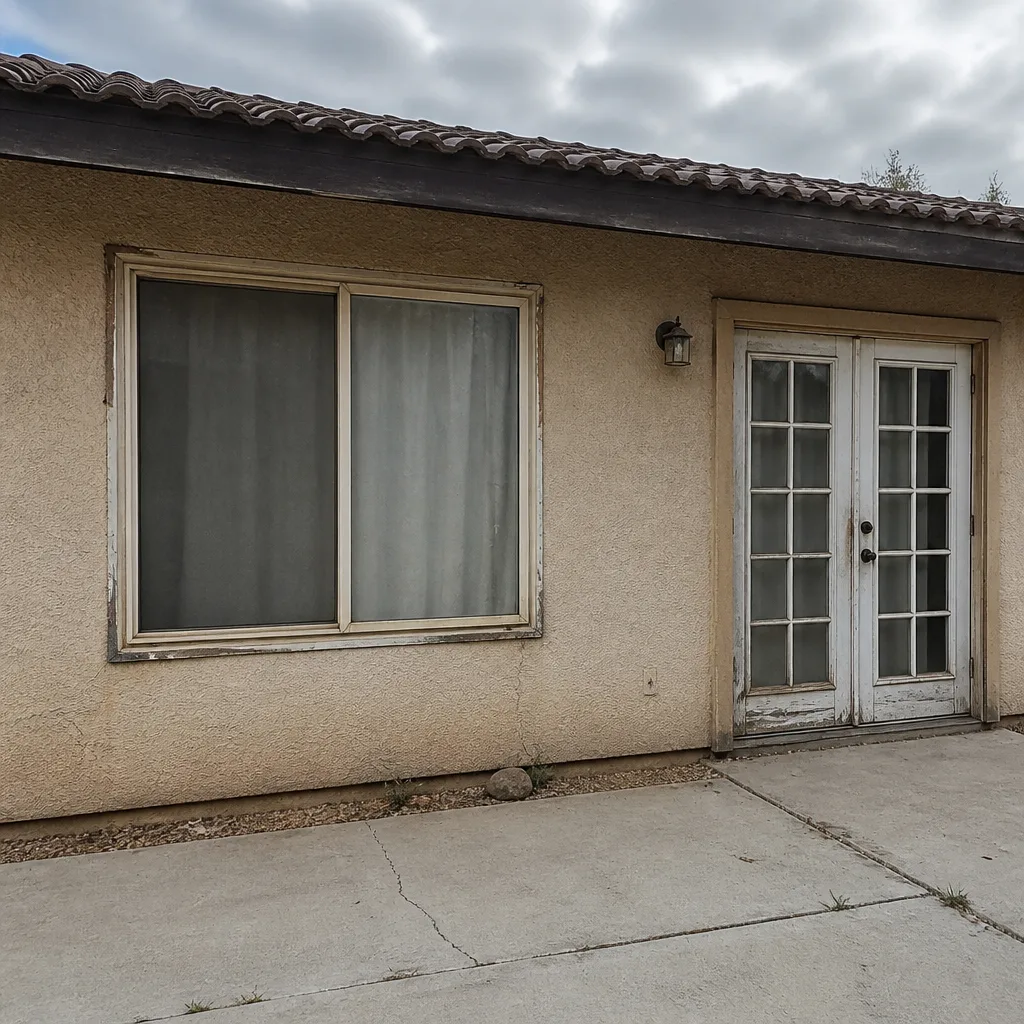 Before
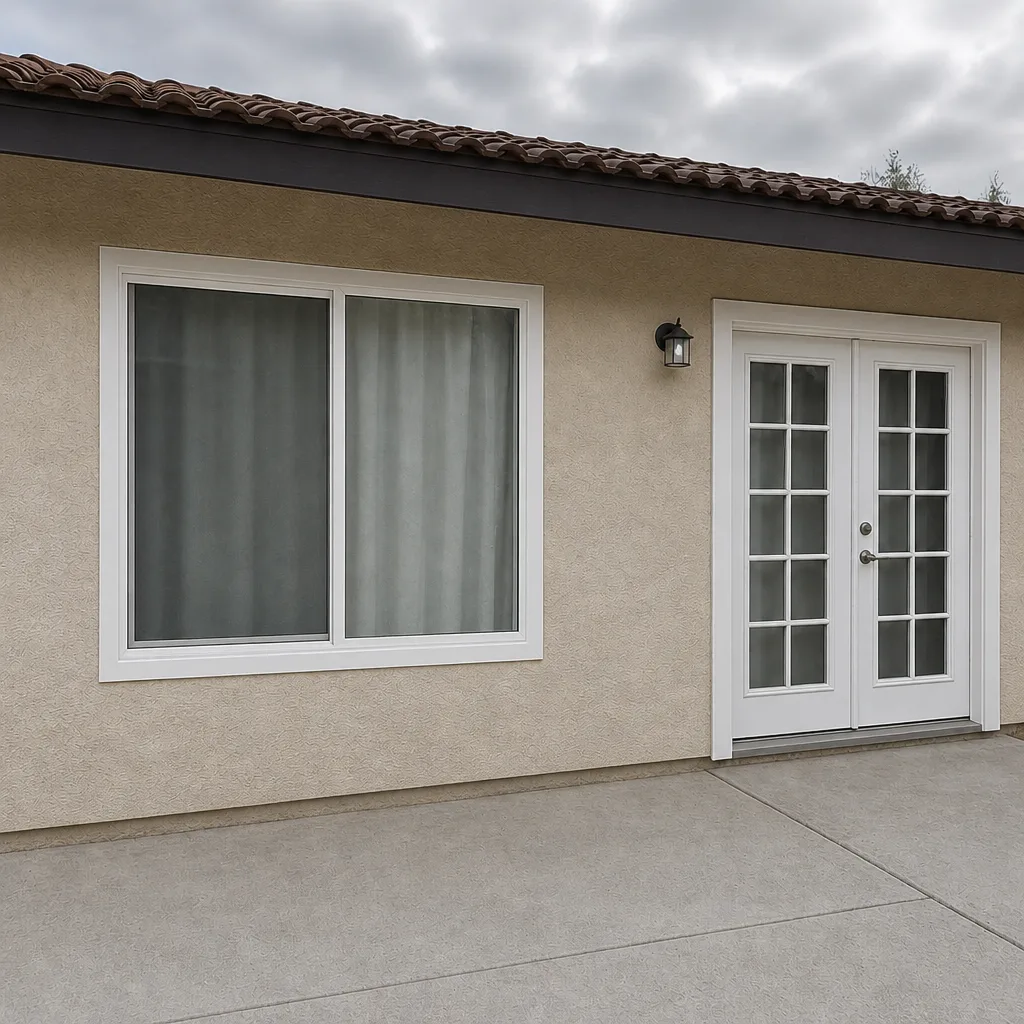 After
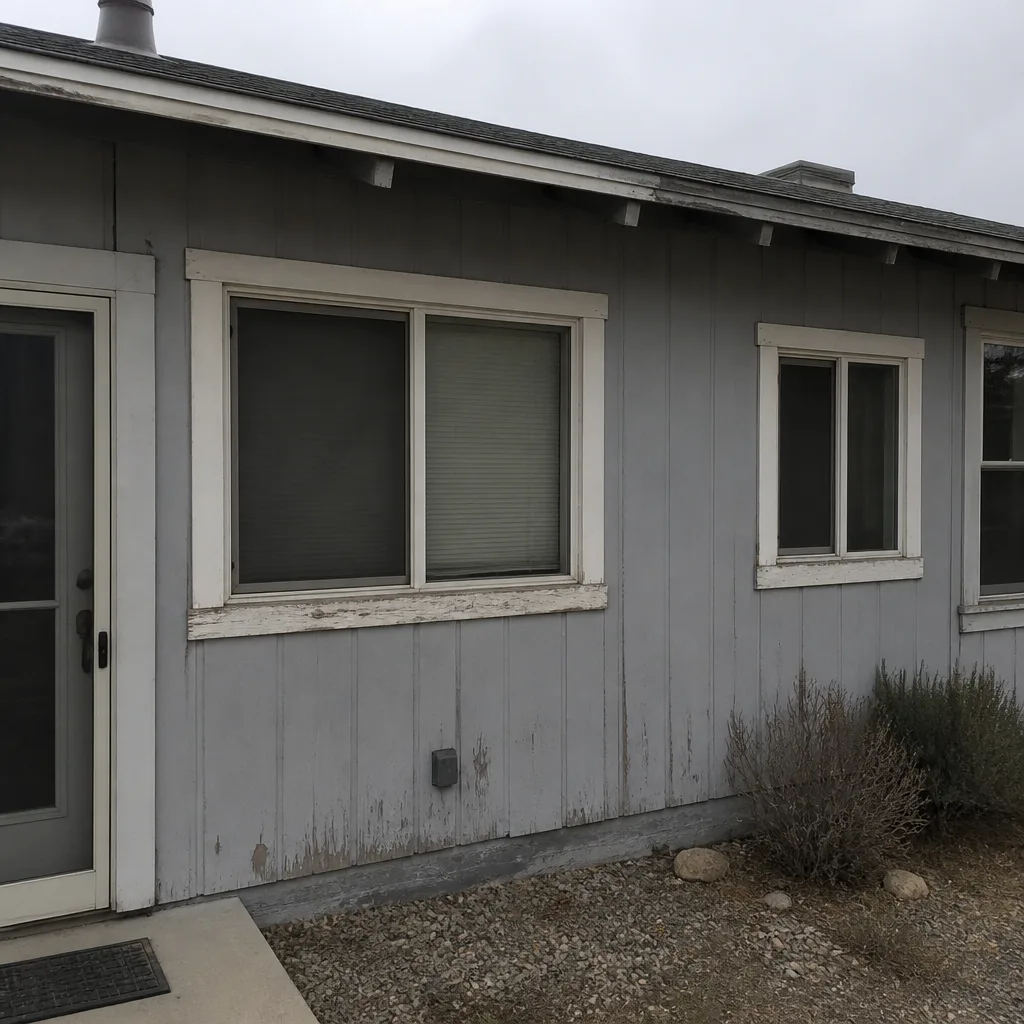 Before
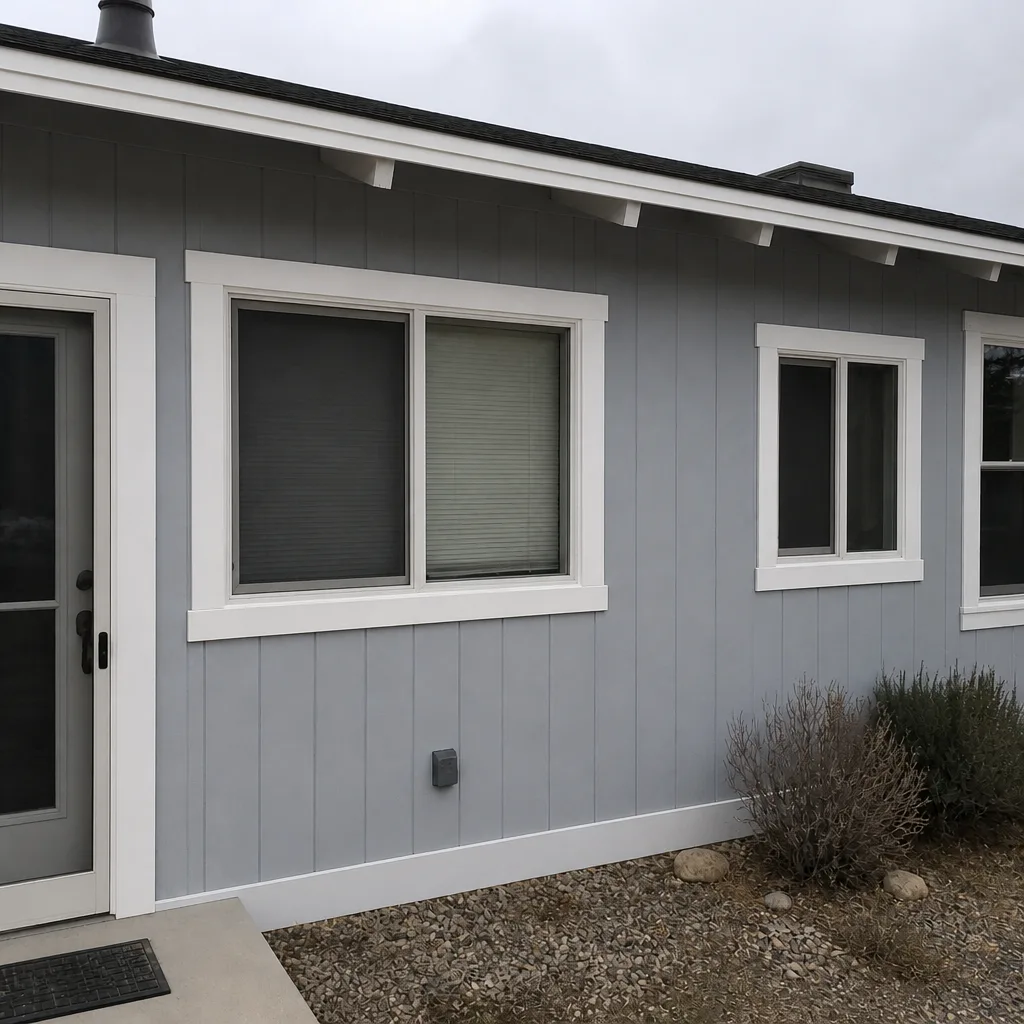 After
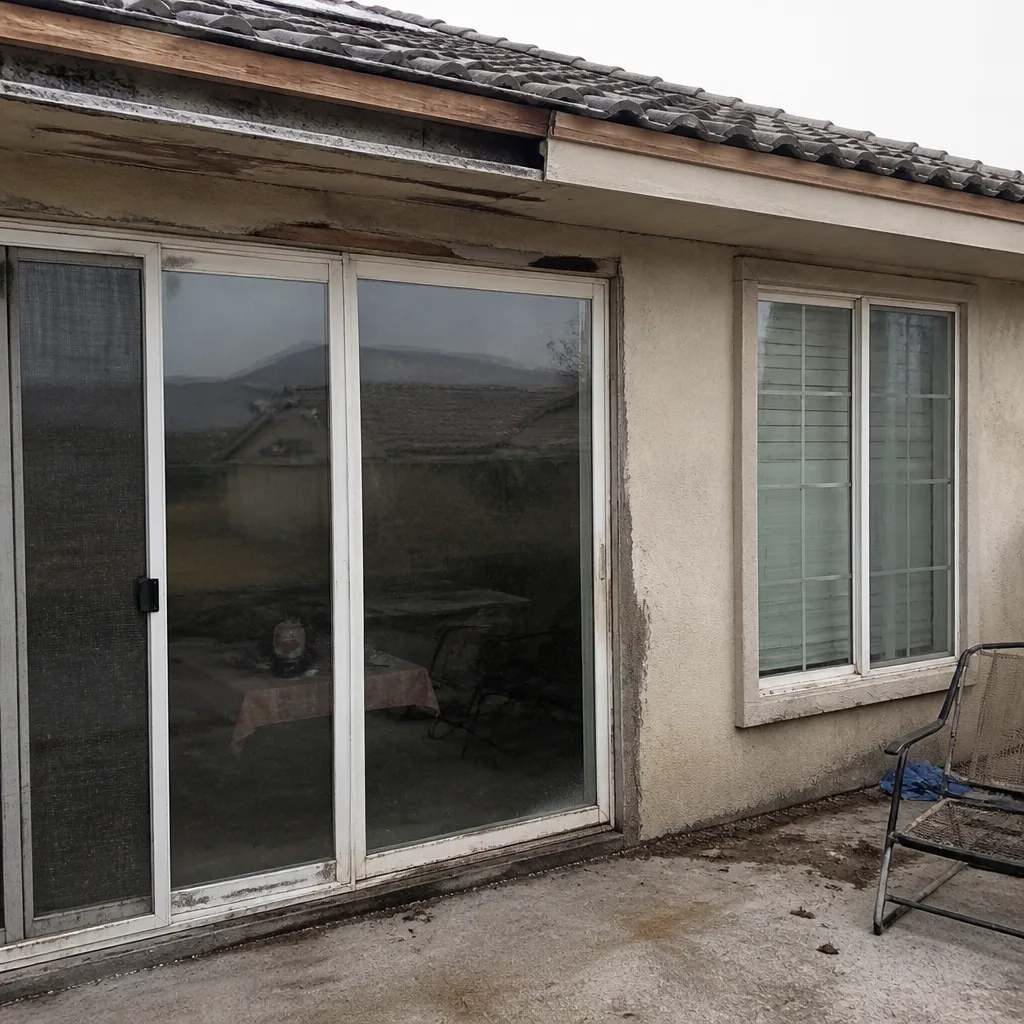 Before
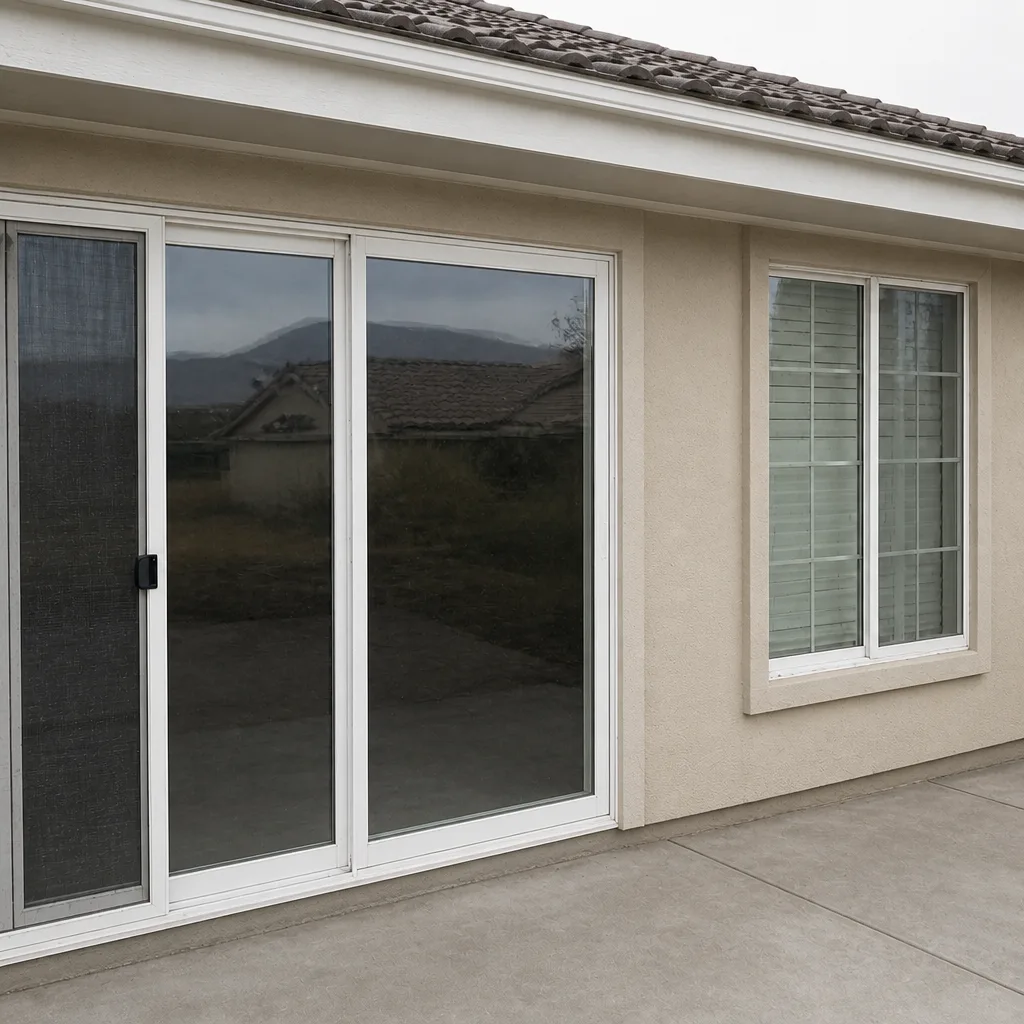 After
When to Call a Professional
Some of this checklist is genuinely homeowner work: clearing a weep hole, the dollar-bill weather-strip test, the cold-morning hand test, lubricating an operator. Call a professional when a weep hole will not clear, when an operator has seized, when you have a cold spot that photo evidence shows is a failed seal, or when a window binds in July and you suspect the shims. Call, too, for any water intrusion that shows as a stain on interior drywall or a soft spot in the framing, and for a window that has been hit by a storm. The real-world rule from our side: if a window is new enough that the failure looks like installation rather than age, and you are inside the first season, that is our conversation to have, not yours to troubleshoot alone. We offer free estimates in Mesquite and can give you a straight answer on whether a seal or a shim is the problem. Call (833) 620-7092 and a live person will answer.
Frequently Asked Questions
Twice a year for lubrication and inspection, plus opportunistic checks after the first cold snap and the first real rain. The spring check covers operator lubrication and weep holes; the fall check covers caulk, weather-strip, and the thermal seal test on the first cold morning. Sun-facing walls get their caulk inspected every 12 months.
A blocked weep hole looks like a smooth ledge rather than an open slot, and the hinged flap over it is usually stiff or crusted. The clog forms underneath the slot, so the frame face still looks clean. Crouch down and run a finger along the exterior sill; you should feel an open notch.
Yes, using the back of your hand on a cold morning. Run it across the glass and a failing unit shows a distinct cold band or patch where the insulating gas has leaked out. Photograph it and start a warranty claim before the fog becomes visible, so you are still inside coverage.
UV exposure and orientation. A west- or southwest-facing wall in Mesquite takes the full afternoon sun and can lose its caulk in as little as two years, while a shaded north wall may last five. Rub the bead: if it powders, it has failed.
It points to a shimming problem, not a hardware problem. The frame is moving against shims that were not set right at installation, and the temperature swing makes it bind in the heat and free in the cool. This is the exact condition our 90-Day Done Right Promise is built to catch.
Yes. Every installation includes permits pulled and inspections passed where required, and The Keystone Standard means both manufacturer warranty layers are registered in writing with durations stated before we leave. You will have the documentation in hand. Call (833) 620-7092 for a free estimate and a straight answer on what your specific windows need.
The Bottom Line
Window maintenance in Mesquite is not about cleaning glass. It is about catching the four failure patterns this climate produces: clogged weep holes, failed thermal seals, UV-shortened caulk life, and dried-out operators. Every one of those is visible to a homeowner who knows what to look for, and every one gets expensive fast if it goes unnoticed. The 90-day window after installation is the most important season of all, because that is when shims and flashing either prove themselves or reveal themselves. Do the spring and fall checks, keep a dated record, and call a professional when the answer is not obvious. If you want a second set of eyes on your windows, call TruePane Windows & Doors Mesquite at (833) 620-7092 for a free estimate. (833) 620-7092 is the number to schedule it.
Written by the team at TruePane Windows & Doors Mesquite.