
Last updated November 17, 2026
 Sliding glass doors
 Single hung
 Double hung
 Horizontal roller
 Casement
 Bay & bow
 Entry doors
 Impact garage doors
 PGT
 CGI
Free in-home measure and quote - PGT, CGI and CWS impact lines compared on your actual openings, style by style
Get your free estimateSeasonal Windows & Doors Care for Mesquite: Year-Round Homeowner’s Guide
By the time a Mesquite homeowner notices the weather-strip is failing in July, the seal has been degrading since April. The heat accelerates the last 20% of that deterioration fast enough to feel sudden, but the damage was months in the making and, in most cases, preventable. Mesquite does not run on four equal seasons. It runs on one brutal season (June through September), one preparation season (March through May), and two recovery seasons (late fall and winter). A maintenance calendar copied from a national checklist treats those months the same, which is why doors here start to bind in July and whistle in January. This guide rebuilds the year around Mesquite’s actual climate curve and tells you what to do before the desert decides for you.
Quick Answer
Seasonal window and door care in Mesquite means prioritizing an exterior inspection and re-caulking window in March and April, before frames thermally expand and exterior sealants stop bonding correctly. It means checking door sweeps, low-sill windows, and weep holes before the monsoon season arrives in late July, and testing hardware on hinges and multi-point locks after the winter wind events that run along the I-15 corridor. The single biggest mistake is waiting until you feel a draft or see water inside – by then the failure has been working for weeks.
Styles & brands we work with
- Single hung
- Double hung
- Horizontal roller
- Casement
- Bay & bow
- Sliding glass doors
- Entry doors
- Impact garage doors
- PGT
- CGI
Table of Contents
- Why Mesquite’s Climate Breaks the Standard Maintenance Calendar
- The March-April Window: What to Inspect and in What Order
- The Right Caulk for Mesquite Heat (and When Not to Apply It)
- Monsoon Season: The Infiltration Risk Nobody Warns You About
- Winter Wind Events and the Hardware That Shows the Wear
- The Paper and Flashlight Draft Test You Can Do Today
- A Mesquite-Specific Year-Round Maintenance Checklist
- Repair or Replace? How to Know Which Season You’re In
Why Mesquite’s Climate Breaks the Standard Maintenance Calendar
The national maintenance advice you’ll find online assumes weather that ramps up and down gradually. Mesquite doesn’t work that way. Temperatures here can swing from the 70s to over 100°F inside a few weeks, and the low desert around the Virgin River Valley holds onto heat well after sunset. That swing matters to your windows and doors because every material in an opening – vinyl, aluminum, wood, glass, sealant, weather-strip – expands and contracts at a different rate.
In our experience, the practical result is that a door that closes cleanly in February can bind by mid-June without anyone touching the hinges. The frame has moved. The slab hasn’t kept pace. Nothing is broken; the geometry is just working against you.
Two things follow from that:
- Inspection has a deadline. The best time to look at exterior sealant on a Mesquite window or door is before the frames swell into their hot-weather position. Once they do, you’re inspecting a temporarily larger opening and the sealant gap you’re evaluating isn’t the gap you’ll have in fall.
- Two failure modes, two seasons. Heat failure shows up as binding, cracking caulk, and fogged glass. Wind-and-water failure shows up as infiltration during monsoon storms and drafts in winter. You have to check for both, at different times of year.
We’ve worked on homes across Mesquite where the same south-facing sliding door has been re-caulked every two years and re-aligned every summer. The homeowners weren’t neglectful. They were just working from a schedule built for a place with a gentler climate. If you want a broader look at the components involved, our window installation in Mesquite page covers what a properly set opening looks like from the start.
The March-April Window: What to Inspect and in What Order
Mesquite has one realistic preparation window, and it is roughly March through April. After that, exterior temperatures commonly climb past 100°F, and several of the most important maintenance tasks become ineffective or outright fail. The sequence matters because each step depends on the one before it, and doing them out of order wastes the season.
Here is the order we recommend:
- Clean the glass, frames, and tracks first. You can’t inspect a seal through desert dust. Grit in a sliding door track also masks whether the door is actually binding or just dirty. Use a vacuum and a damp rag, not a pressure washer, which can force water past weep systems.
- Inspect exterior sealant joints at every opening. Look at the perimeter where the frame meets the stucco, siding, or masonry. A joint that has pulled away, cracked, or turned chalky is a candidate for replacement. Note these – don’t caulk yet.
- Operate every operable window and door. Open and close each one. Note where it catches, where it rubs, and where the latch doesn’t quite engage. This gives you a baseline before the heat arrives and expands everything.
- Check weather-strip and sweeps. Run a hand along the bottom and sides of each door. Felt or foam weather-strip that crumbles or stays compressed is done. Door sweeps that no longer touch the threshold let both air and insects in.
- Confirm weep holes on windows and sliding doors are open. Weep holes are the small drainage openings at the bottom of a frame. If they’re painted over or clogged with debris, water that gets behind the frame has nowhere to go.
- Re-caulk failed exterior joints last. Only after cleaning and inspection, and only when temperatures are in the right range. See the caulk section below – this is the step most Mesquite homeowners get wrong.
Do this sequence once in March or early April and you’ll enter summer knowing what you’re working with. If a window or door is already beyond maintenance, our window replacement in Mesquite page explains what to expect from that process.
The Right Caulk for Mesquite Heat (and When Not to Apply It)
This is the section most guides skip, and it’s where Mesquite homeowners lose the most ground. A sealant that cures correctly at 70°F can skin over and fail to bond when it’s applied at 100°F or above. The surface dries before the bead can adhere, and the joint looks fine for a season, then peels away. You’ve spent a Saturday in the sun for nothing.
Here is what we tell homeowners:
- Use a high-performance exterior sealant rated for masonry, stucco, and vinyl. Look for a product labeled for exterior use with a stated application temperature range. Standard painter’s caulk and interior-grade latex are wrong for this climate. A polyurethane or high-grade siliconized sealant rated for the joints you’re sealing holds up better to the thermal movement this region produces.
- Respect the temperature range on the tube. Most exterior sealants specify application between roughly 40°F and 90°F, some up to 100°F. If the tube says 90°F, don’t apply it at 95°F. In Mesquite, that means spring and fall are your realistic caulking windows, with early morning being the coolest time in summer if you must.
- Don’t caulk a joint that’s actively moving. A crack wider than about a quarter inch, or one that closes and reopens with temperature, needs backer rod and a sealant designed for movement, not a surface bead.
- Never seal weep holes. Covering the drainage path at a window or sliding door sill traps water behind the frame, which is exactly the failure you’re trying to prevent.
If the frames on your home are older and thermo-movement is severe, the joint keeps opening faster than sealant can hold it. That’s one sign the TruePane Windows & Doors Mesquite home team evaluates – the sealant isn’t the problem, the opening is.
Monsoon Season: The Infiltration Risk Nobody Warns You About
Late July through September brings Mesquite’s summer storm pattern: short, intense bursts of rain driven at an angle by wind. A standard “fall weatherization” schedule completely misses this, because by the time a homeowner thinks about weatherproofing in October, the monsoon risk has passed. The window between “it’s going to rain hard” and “it already is” is where the work needs to happen.
The specific risk this season creates:
- Door thresholds and bottom rails. Wind-driven rain pushes water against the bottom of exterior doors. A failed threshold seal, a worn sweep, or a door that no longer sits flush lets water travel under the door and into the house. Most homeowners only notice after a storm has already soaked a rug.
- Low-sill windows and sliding glass doors. Openings close to grade or to a patio surface see more splash-back during powerful storms. If the sill isn’t properly flashed or the weep system is clogged, water finds the wall cavity.
- Storm-facing openings. In our experience, the same side of the house gets tested every summer – typically the side that faces the storm approach. That’s where to look first.
- Interior evidence after storms. Water staining on interior trim, bubbling paint, or a soft drywall corner below a window is a sign that water has already been getting through. This warrants prompt attention, not waiting until fall.
The fix is not sophisticated: check that sweeps and weather-strips are intact before late July, confirm weep holes are open, and look at thresholds for gaps. If water is already coming in during storms, that’s a door installation in Mesquite conversation, not a caulk conversation.
Winter Wind Events and the Hardware That Shows the Wear
Mesquite winters are mild compared with the rest of Nevada, but the I-15 corridor funnels wind through this valley, and winter is when those wind events hit hardest. High-wind seasons stress hardware that doesn’t get much attention the rest of the year. When the storms pass, check these points:
- Door hinges. Loose screws at the top hinge are common after a windy stretch. Repeated wind pressure on a door that gets pushed and pulled can enlarge the screw holes. If the top hinge wobbles, a longer screw or hinge repair is the early fix; a sagging door is the late one.
- Multi-point locks. A multi-point locking system engages along multiple points of the door’s edge. Wind flex can gradually cause misalignment, which shows up as a handle that needs more force or a door that no longer latches cleanly at every point. Don’t force it – misalignment under force bends hardware.
- Door closers. If you have a closer on a patio or garage-entry door, high-wind seasons are when the arm loosens and the closing speed changes. A closer that slams or fails to catch is a wind-stress symptom worth fixing before it damages the door or a hinge.
- Weather-strip compression. Winter wind is a great diagnostic. If you feel air moving at a closed door, the weather-strip has lost its compression, and you’ve found your infiltration point.
Winter is also the best season to test for drafts, because the temperature difference between inside and outside does the diagnostic work for you. The paper-and-flashlight test in the next section works any time, but wind makes it easy.
The Paper and Flashlight Draft Test You Can Do Today
You can locate window and door infiltration from inside the house on a windy day, without specialty tools. This is a simple version of the diagnostic we run on service calls, and it’s a realistic first step for any Mesquite homeowner.
What you’ll need: a sheet of thin paper (tissue works), a flashlight, and a windy day.
- Turn off interior HVAC and close all other openings in the room, so you’re measuring infiltration from outside, not air moving between rooms.
- Hold the tissue near the perimeter of the closed window or door – the frame, the sill, the weather-strip, and the meeting point of a sliding panel. Work your way around the whole opening slowly.
- Watch for movement. Anywhere the tissue flutters, air is entering. Mark it with a small piece of tape.
- Use the flashlight in a dimmed room to shine along the top of the weather-strip and at the corners of the frame. Small gaps often show up as light where light shouldn’t be.
- Log what you find. A flutter near a hinge means hardware or weather-strip. Water in the same spot during the last storm tells you the same area has two problems.
What you do with the results depends on where the air is coming from. A failed weather-strip or sweep is a maintenance fix. Air moving between the frame and the wall is a sealing or flashing problem. Air moving through a window sash that no longer closes tight may mean the opening itself is out of true, which is the point where a professional inspection makes sense.
A Mesquite-Specific Year-Round Maintenance Checklist
This is the calendar we’d give a homeowner in this valley. It’s built around the climate, not the four-season calendar.
- March-April (preparation season): Clean glass, frames, and tracks. Inspect all exterior sealant joints. Re-caulk failed joints in the proper temperature range. Operate every door and window and note binding. Check weather-strip and sweeps. Confirm weep holes are open. Order any replacement seals you’ll need before summer.
- May-June (last clear window): Test for drafts. Address hinge and hardware issues while temperatures are still moderate. If a window or door is showing serious signs of failure, this is the month to get a proper look at it.
- Late July-September (monsoon season): Check door thresholds and sweeps before storm season. Confirm weep holes. After each significant storm, look for interior water staining, soft trim, or bubbling paint.
- October-November (recovery): Repair what the monsoon revealed. Re-check any caulk joints that shifted during summer. This is a good season for exterior sealing work.
- December-February (winter wind): After high-wind events, check hinges, multi-point locks, and door closers. Do the paper-and-flashlight draft test. Confirm weather-strip compression.
Our $89 Seasonal Tune-Up is designed to cover the spring sequence for homeowners who’d rather not do it themselves, and there’s a current $50 Off Any Repair Over $250 offer for repair work. We don’t invent promotions, so what you see here is what we run.
Repair or Replace? How to Know Which Season You’re In
Some maintenance is maintenance. Some of it is a signal that the opening has reached the end of useful service. Here’s how we think about it.
Repair territory: A worn weather-strip or sweep, a single cracked caulk joint, a loose hinge screw, a latch that needs alignment, or a clogged weep hole. These are maintenance items and they can be done right without removing the window or door.
Replacement territory: Glass that’s fogged between the panes (the seal has failed and no amount of caulk fixes it). Frames that are warped or no longer hold the sash tight. Water intrusion that repeats after storms despite sealing. Doors that bind badly in summer and whistle in winter in the same season. Frames that have outlived the seals they can hold. When you’re consistently seeing two or more of those, the maintenance calendar has become a list of callbacks, and the honest answer is that the opening needs to be replaced.
Windows and doors in this climate work hard. If yours are pushing the edge of their lifespan, it’s worth understanding what the options are before making that call. The TruePane Windows & Doors Mesquite home team walks homeowners through that decision with a written, side-by-side quote, so it’s not a guess.
A note on the safety of the work itself: window and door repair that involves handling glass, adjusting tensioned hardware, or working on elevated openings is not a do-it-yourself job. Broken glass and falling hardware cause real injuries. Even a simple repair to a second-story or elevated-patio door carries fall risk. If the work involves any of that, use a trained professional. We’d rather you call us or another qualified company than take on the risk yourself.
Common Mistakes to Avoid
- Caulking in July. Most homeowners discover a crack during summer and fix it in summer, when sealants skin over before they bond. Wait for cooler temperatures or use a product explicitly rated for the heat, not a standard tube.
- Treating “hard to close” as a door problem. In Mesquite, a door that’s hard to close in summer often means the frame has expanded with the heat, not that the door has warped. Tightening or planing before diagnosing can make it worse.
- Ignoring sweep and threshold seals until after the first storm. The monsoon season tests your door’s bottom edge first. Check before the storms, not after the rug is wet.
- Sealing weep holes to stop a draft. It seems like it would help; it causes water damage instead. Weep holes are drainage, and they need to stay open.
- Waiting for the energy bill to tell you something’s wrong. Summer bills spike in every Mesquite house. A bill increase is the last signal, not the first. The draft test gives you an answer in minutes.
- Applying pressure to a misaligned multi-point lock. Forcing a handle that won’t engage bends the hardware inside the door. If it needs force, it needs an adjustment.
- Assuming a simple repair can’t hurt you. Glass handling and height work carry real risk. When in doubt, call a professional.
See the difference
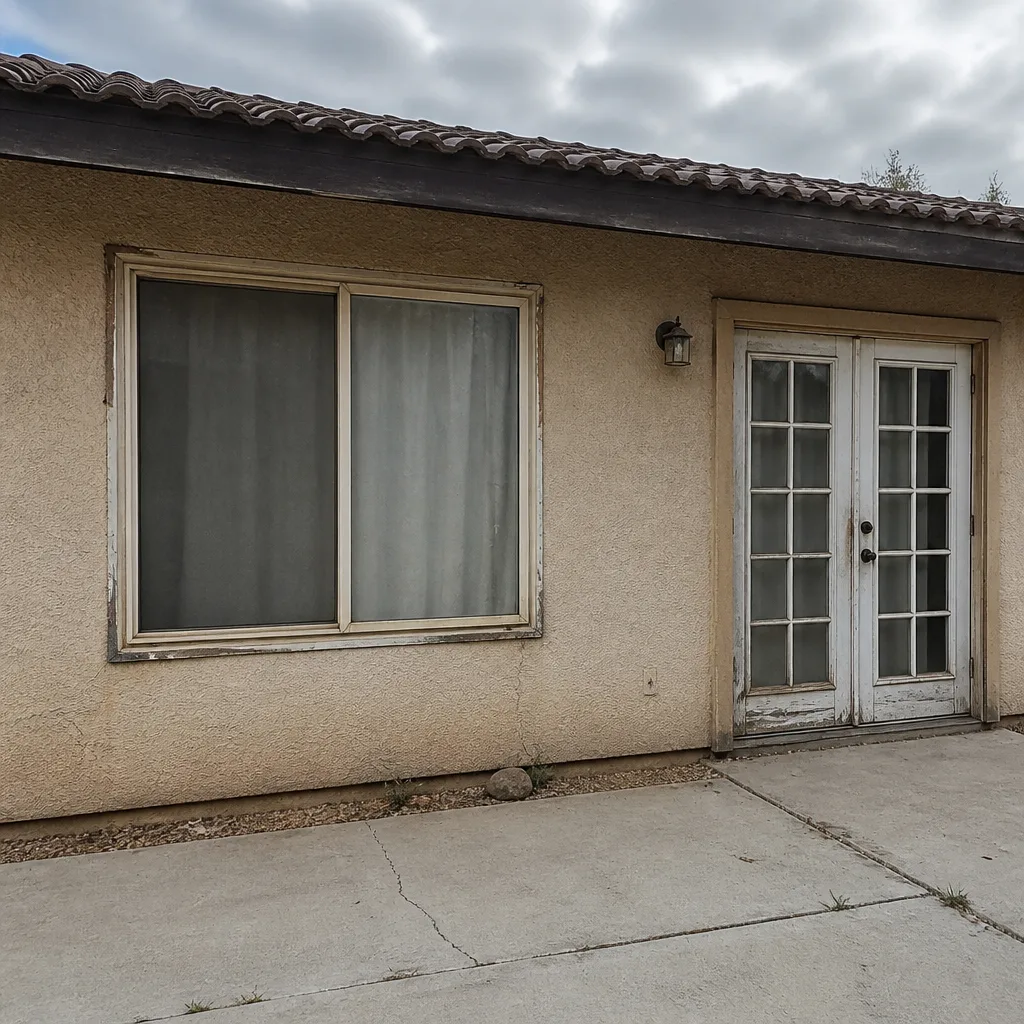 Before
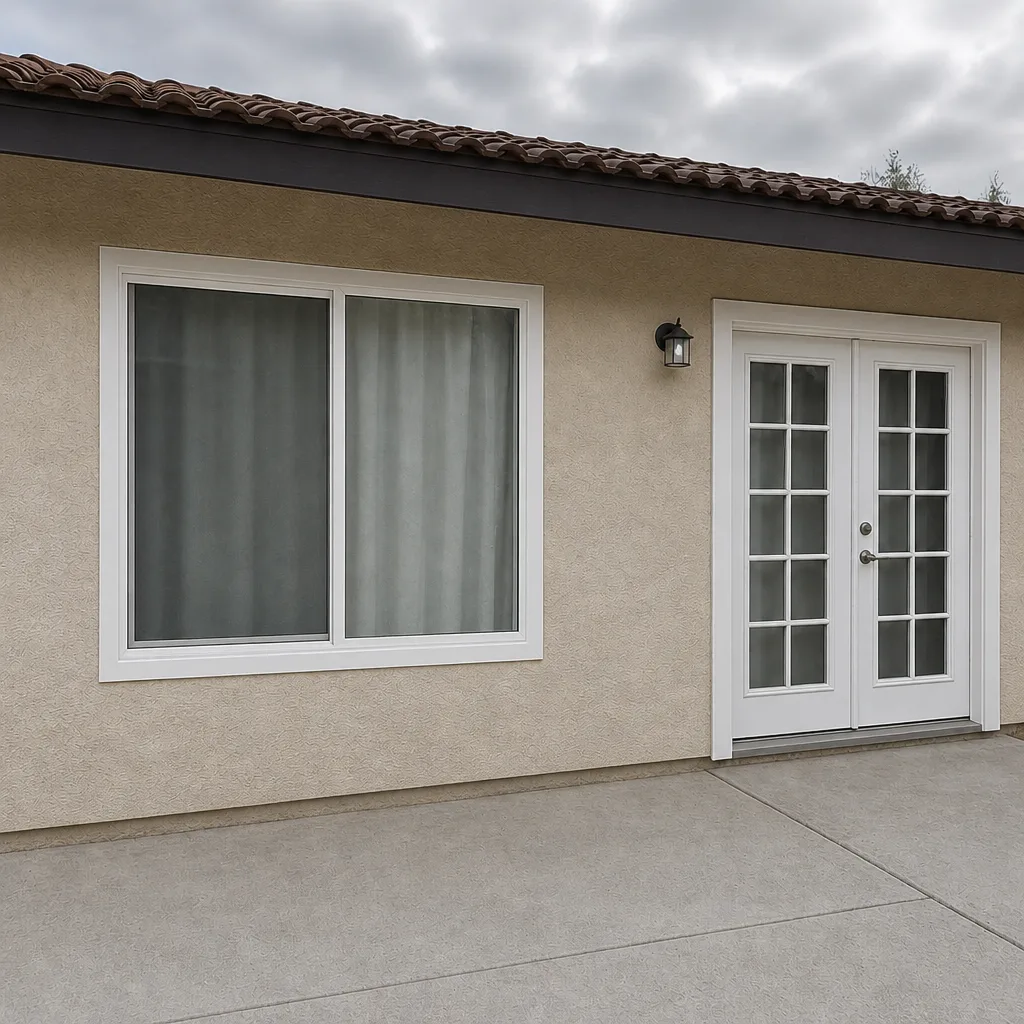 After
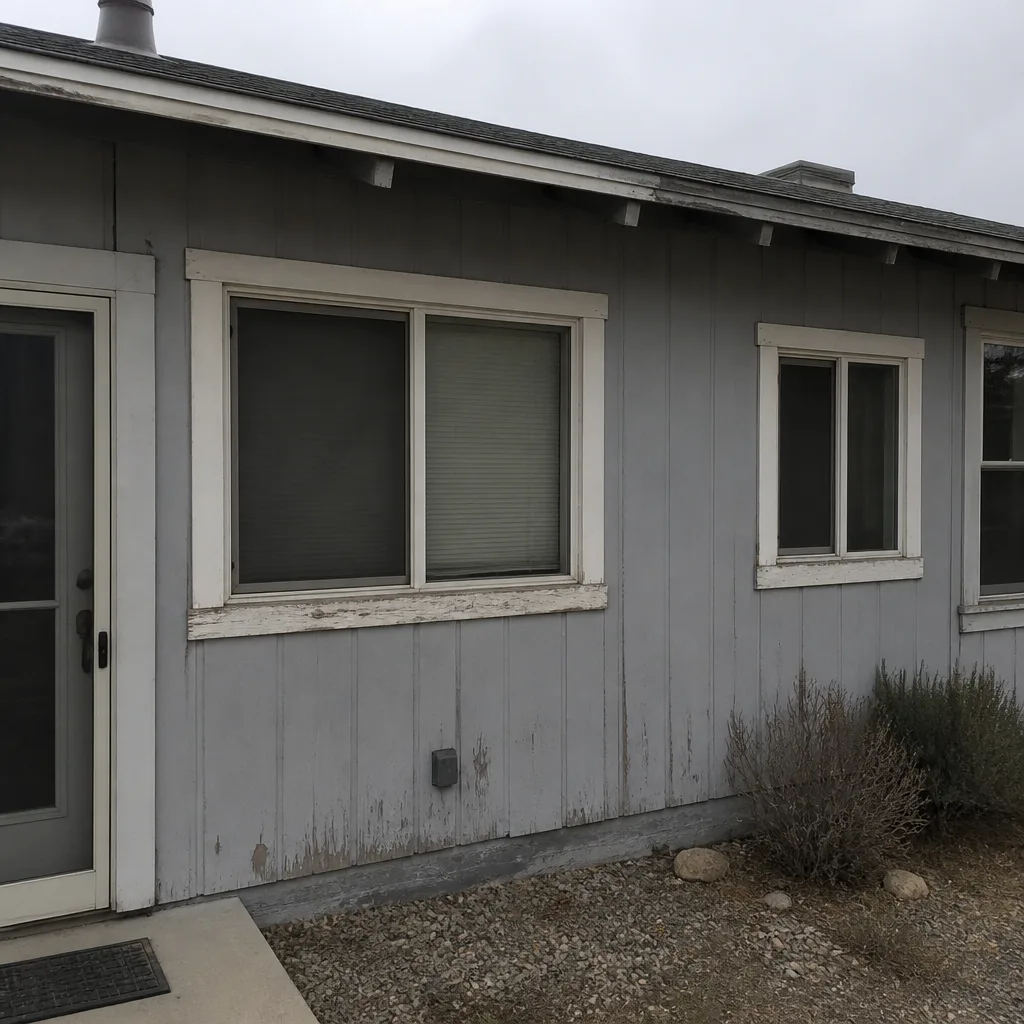 Before
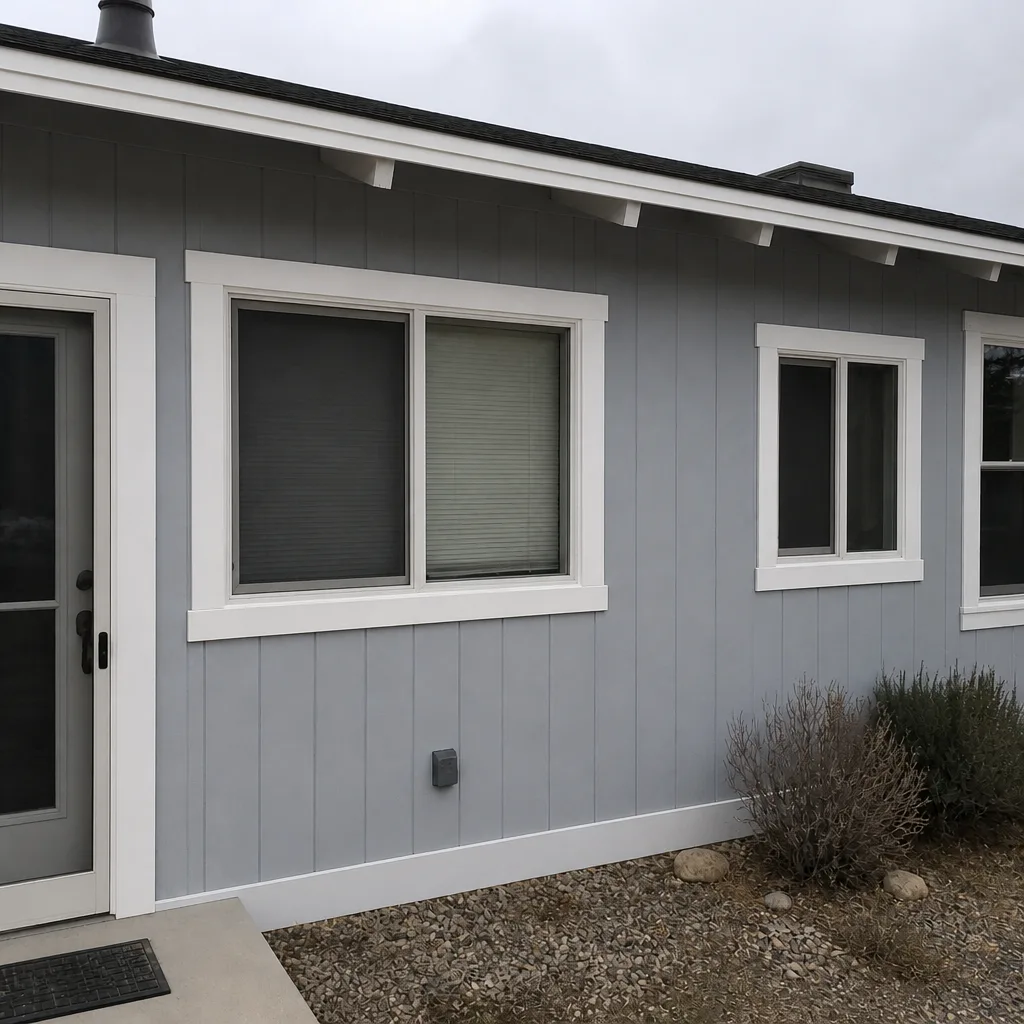 After
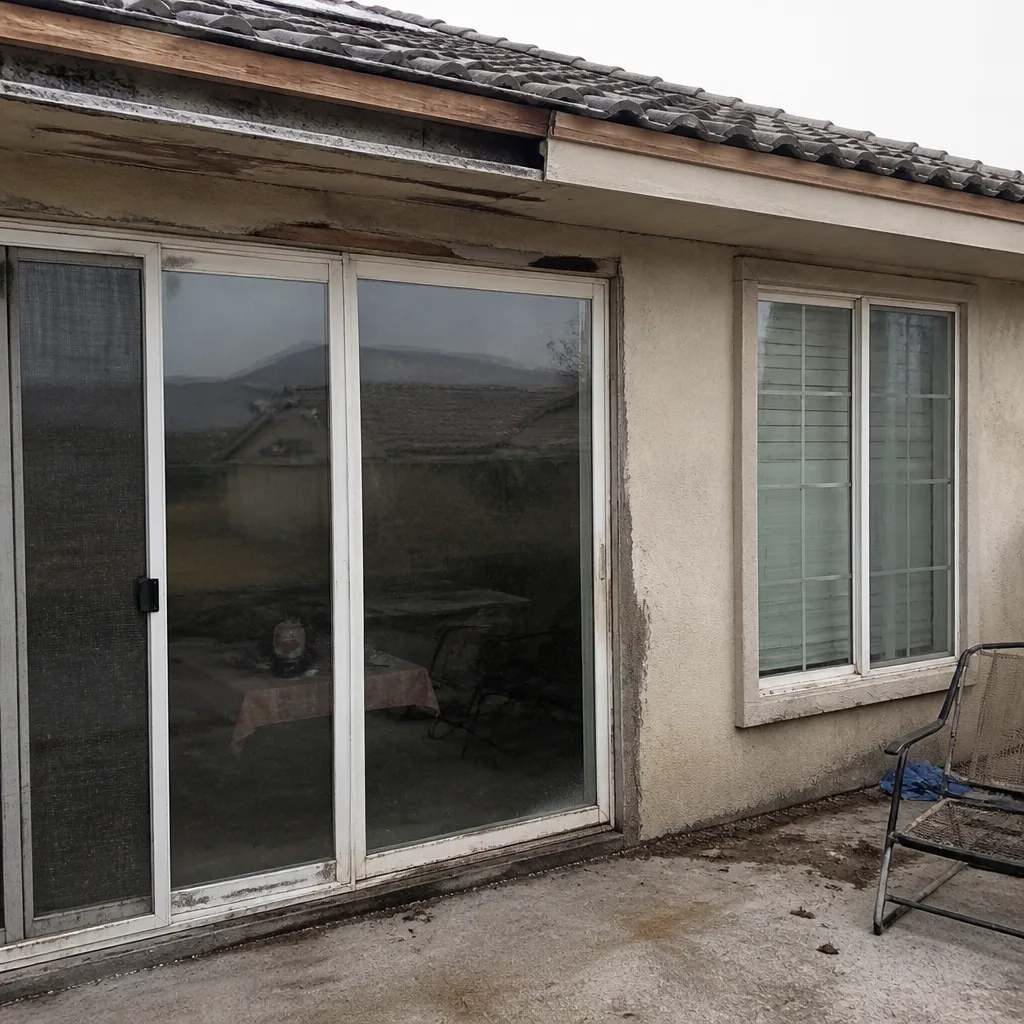 Before
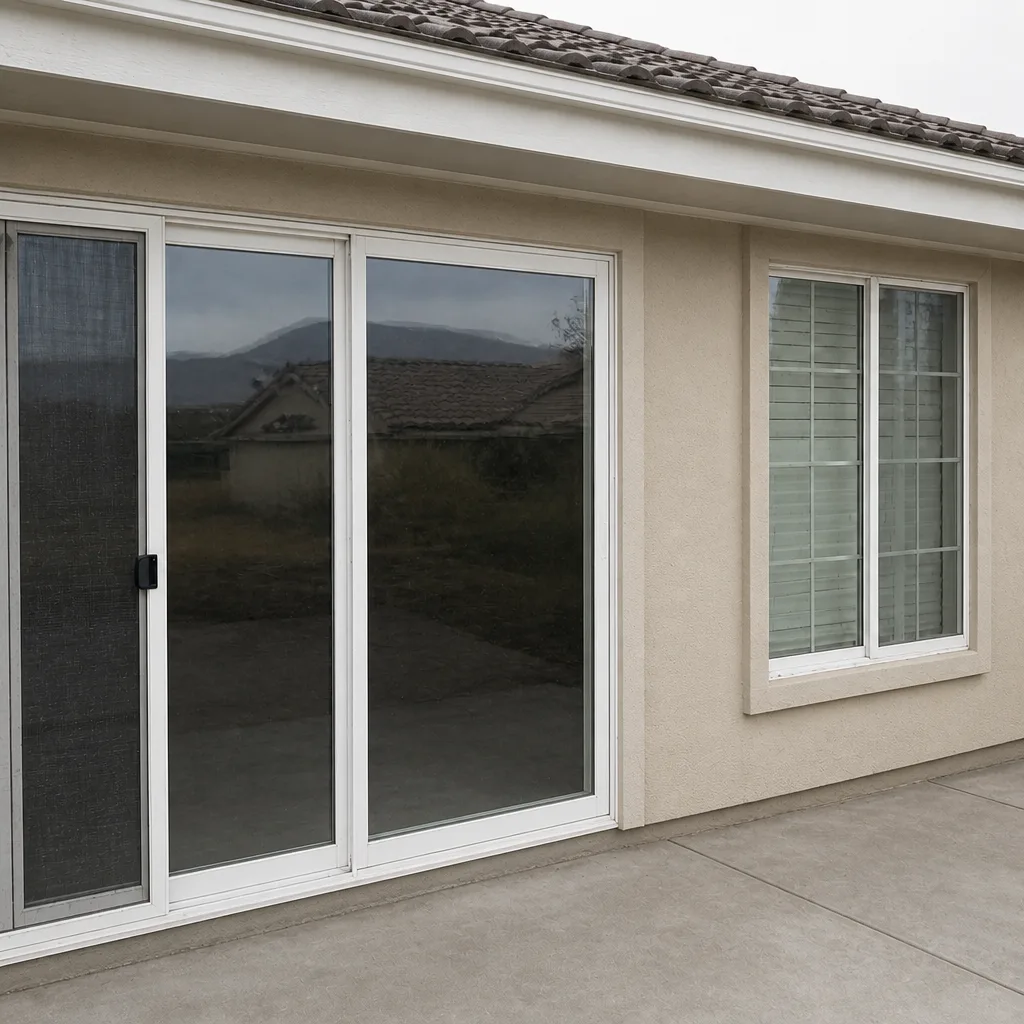 After
When to Call a Professional
Many seasonal items on this list are things a careful homeowner can do. The point to call in is when the work involves broken glass, hardware that won’t align under hand pressure, water that keeps coming in after you’ve re-sealed, or anything on an elevated opening. Those are situations where a trained technician can diagnose the underlying problem instead of treating the symptom. Free estimates in Mesquite are available – call (833) 620-7092 to schedule yours. We answer the phone with a live person, 24 hours a day, and you’ll get a written quote before any work starts.
Frequently Asked Questions
Schedule the main inspection for March through April, before temperatures exceed 100°F. That’s the realistic window for exterior sealing work and for evaluating what the summer heat will do to your frames. The next best time is October through November, after the monsoon season. Call (833) 620-7092 to book a seasonal tune-up and confirm availability.
Because the frames have expanded with the heat. Vinyl, wood, and aluminum all grow and shift as temperatures climb, and a Mesquite summer moves them enough to change whether a door sits flush. The hard closing is usually a symptom of thermal movement, not a broken door. Our technicians can diagnose it and tell you whether it needs an adjustment or points to something more.
Look for a high-performance exterior sealant rated for masonry, stucco, or vinyl, with a stated application temperature range. In Mesquite, respect that range carefully. A product that cures at 70°F can fail to bond when it’s 100°F outside. Apply in spring or fall when possible, and never seal weep holes. Call (833) 620-7092 if you’d like the exterior joints evaluated by a professional.
Yes, especially through door thresholds, low-sill windows, and clogged weep holes. Monsoon rain arrives with wind, which pushes water at angles the opening isn’t otherwise tested at. Check sweeps, thresholds, and weep holes before late July. If you see interior water staining after a storm, call (833) 620-7092 for an inspection.
It depends on exposure and material, but a desert climate is hard on both. Weather-strip wears faster when it’s compressed in summer and stressed by winter wind, and tracks collect grit that accelerates wear. If the weather-strip crumbles or stays flat, or the slider drags, it’s time for replacement. A free estimate will tell you what you’re actually dealing with – call (833) 620-7092.
Check hinges, multi-point lock alignment, and door closers first, since those are the hardware points that show stress after a windy season. Then do the paper-and-flashlight draft test around the openings. If a hinge is loose or a door no longer latches cleanly at every point, don’t force it. Call (833) 620-7092 and a technician can look at it before it becomes a bigger repair.
The Bottom Line
Mesquite doesn’t run four equal seasons, and your maintenance calendar shouldn’t either. Get your exterior inspection and caulking in March and April, before the heat expands the frames and the sealants stop bonding. Get your thresholds, sweeps, and weep holes checked before the monsoon arrives in late July. Get your hardware checked after the winter wind events, and use a simple paper-and-flashlight test to catch drafts early. And don’t wait for the energy bill to tell you something’s wrong. The work on the front end is small and specific. The work on the back end is a repair or a replacement.
TruePane has been serving local communities for over 42 years, with technicians bringing up to 18 years of experience. We work with more than a dozen manufacturer lines – including PGT, CGI, CWS, and ES Windows – and every job is backed by The Keystone Standard and the 90-Day Done Right Promise. If it’s not done right, we make it right, in writing.
Contact Us for a Free Estimate
If your seasonal inspection turns up something that needs more than a new weather-strip, we’ll come out and give you a straight answer. Call (833) 620-7092 for a free estimate – we answer with a live person, 24 hours a day, 7 days a week. Our technicians are background-checked and uniformed, we quote side by side on paper so you see exactly what you’re buying, and both warranty layers are registered in writing before we leave. Seniors and veterans get a permanent 5% discount, and the $50 Off Any Repair Over $250 and $89 Seasonal Tune-Up offers are always available. Whether you have a fogged pane, a door that binds in July, or a seal that’s been leaking since last summer, we’ll tell you what’s true and what it costs. If the pane is not true, the job is not done.
Written by the team at TruePane Windows & Doors Mesquite.