
Last updated November 17, 2026
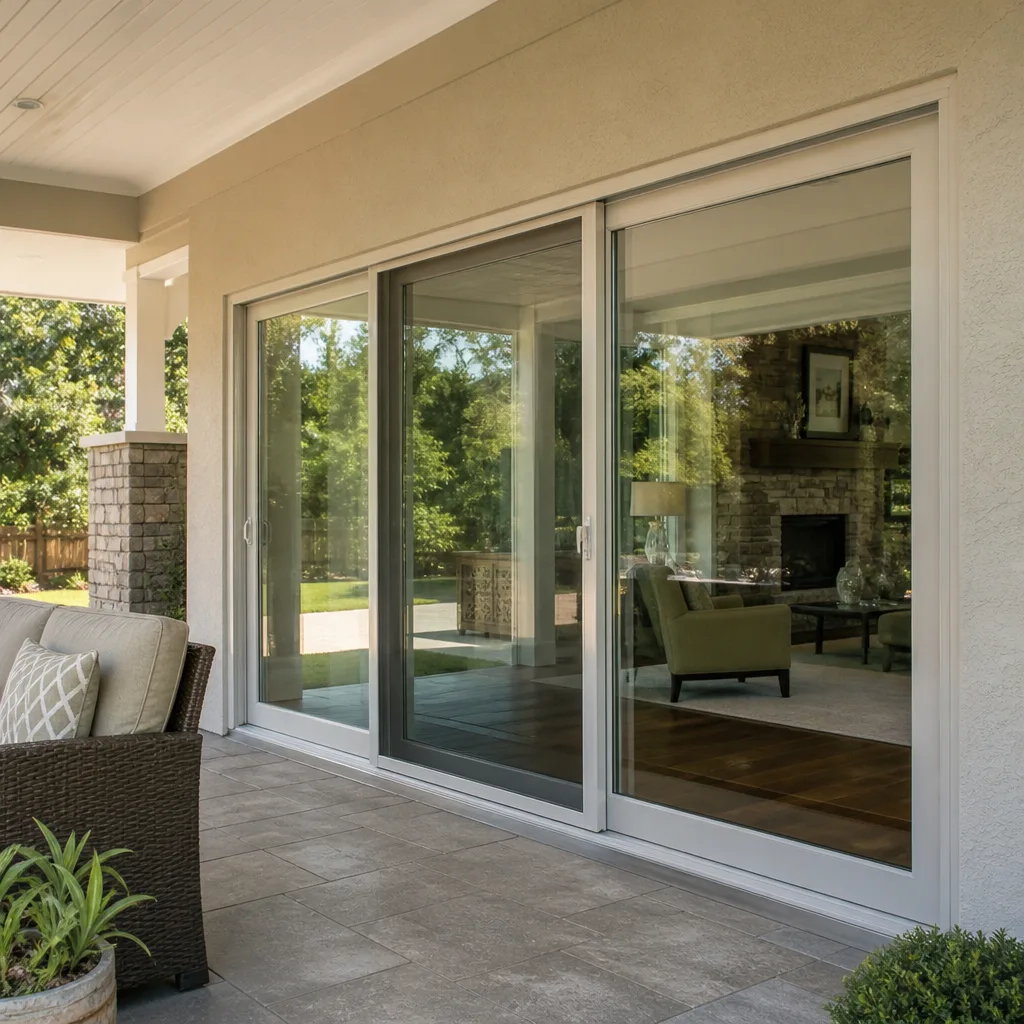 Sliding glass doors
 Single hung
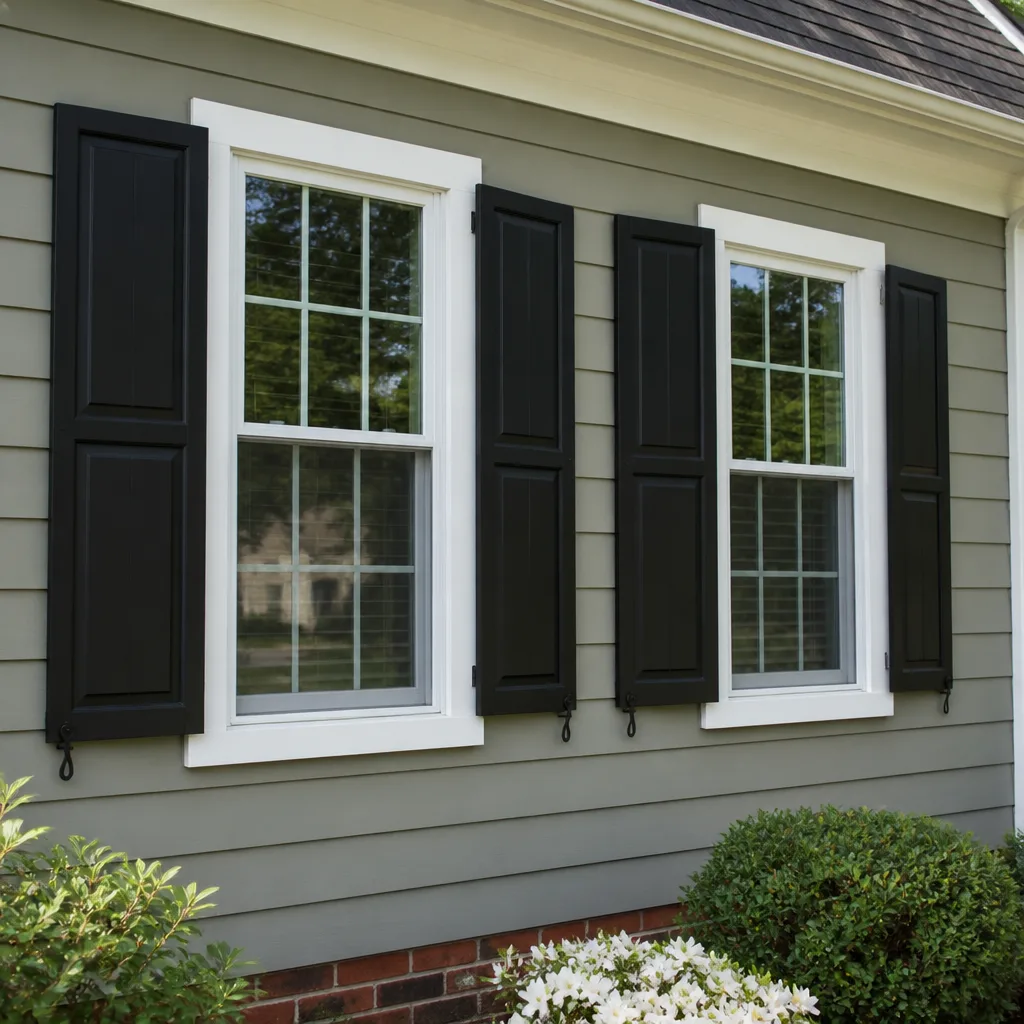 Double hung
 Horizontal roller
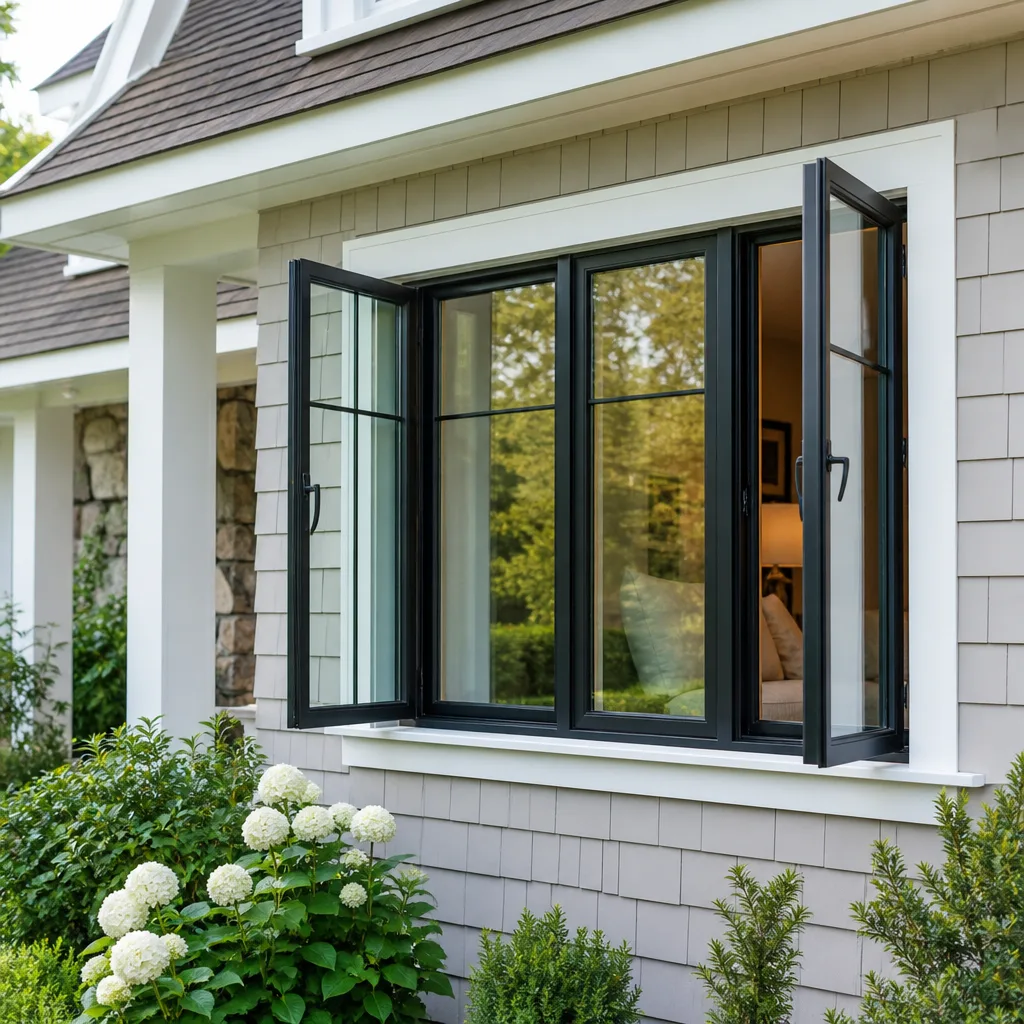 Casement
 Bay & bow
 Entry doors
 Impact garage doors
 PGT
 CGI
Free in-home measure and quote - PGT, CGI and CWS impact lines compared on your actual openings, style by style
Get your free estimateHow to Hire a Windows & Doors Contractor in Mesquite: A Step-by-Step Guide
The contractor who underbids by 20% rarely uses a worse window. They cut time on flashing, shimming, and sill pan preparation – work that is completely invisible once the trim goes up and impossible to verify without tearing the wall back open. In our experience across Mesquite, the homeowners who get burned almost never chose a bad product; they skipped the same two or three questions that would have surfaced the problem before the contract was signed. This guide is built around those questions. It covers how to verify a Nevada license in three minutes, what warranty registration really requires, and the payment clause that protects your money until every frame is checked in daylight.
Quick Answer
To hire a windows and doors contractor in Mesquite, verify the contractor’s Nevada State Contractors Board license classification covers residential glazing, confirm they are a manufacturer-certified installer so the full warranty is honored, ask to see the last three warranty registrations they filed for customers, and structure your payment so final money is withheld until a daylight walk-through inspection is complete. A contractor who hesitates on any of those four is a contractor to pass on, no matter how low the bid.
Styles & brands we work with
- Single hung
- Double hung
- Horizontal roller
- Casement
- Bay & bow
- Sliding glass doors
- Entry doors
- Impact garage doors
- PGT
- CGI
Table of Contents
- Step 1: Verify the Nevada Contractor License
- Step 2: Confirm Manufacturer-Certified Installer Status
- Step 3: The Warranty Registration Question
- Step 4: Read the Written Contract Like a Skeptic
- Step 5: Structure the Payment Schedule
- Step 6: The Questions to Ask on the Walk-Through
- Common Mistakes to Avoid
- Frequently Asked Questions
Step 1: Verify the Nevada Contractor License in Under Three Minutes
Every contractor legally installing windows and doors in Nevada needs a valid license from the Nevada State Contractors Board (NSCB). Not a business license from the city, not a “registered in Nevada” certificate printed in a flyer – an NSCB license with a classification that covers residential glazing and finish carpentry. This is the first thing to check, and it takes about three minutes on the NSCB website.
Here’s how to do it:
- Open the Nevada State Contractors Board license lookup. Have the contractor’s license number in front of you – they are required to give it to you.
- Search by license number, not by company name. Names get reused; license numbers are unique and permanent to the business.
- Confirm three things at once: the license status is “active,” the classification covers residential windows and doors, and the qualifier on record is a real person tied to that business.
- Check the disciplinary history tab. Bond claims, workmanship complaints, and citations show up here, and the board does not hide them.
- Verify the license expiration date falls after your installation date. A license that lapses mid-project is a problem you don’t want to solve while your wall is open.
The classifications to look for are generally Residential (R) or a specialty classification that covers finish carpentry and glazing. If a contractor cannot name their license classification without checking their own paperwork, that is already a signal. We keep ours on file and hand it over before you ask – that’s the baseline for a Mesquite company that expects to be here in thirty years.
Step 2: Confirm Manufacturer-Certified Installer Status
“Manufacturer-certified installer” is not marketing language. It’s a specific designation issued by the manufacturer when a contractor completes their installation training and agrees to install to their published methods. That matters because a growing number of manufacturers – including the lines we work with like PGT and CGI for impact and energy-efficient units – will shorten or void the full warranty duration if the installation wasn’t performed by a certified installer.
What it means for you in practical terms:
- A certified installer follows the manufacturer’s flashing, sill-pan, and fastening schedule to the letter – the same work that gets cut on a low bid.
- The material warranty (the window itself) may remain intact, but the labor and installation warranty can disappear without certification.
- Some manufacturers require proof of certification before they’ll honor a claim at all, even on a manufacturing defect.
The problem is the contractors who are not certified rarely volunteer it. They’ll say “we install all major brands” – which is different from “we’re authorized.” Ask directly: “Are you a certified installer for this manufacturer, and can you show the certificate or the authorization letter?” A contractor who is certified will produce it without hesitation. A contractor who isn’t will change the subject to price.
We’re an authorized installer for more than a dozen lines – Andersen, Pella, Marvin, Milgard, Jeld-Wen, PGT, CGI, and ES Windows among them – and the certificates are on file. When we quote side by side on paper, it’s because the manufacturer’s certification and warranty terms differ from line to line, and you should see exactly what you’re buying before you sign. That’s part of our window installation in Mesquite process.
Step 3: The Warranty Registration Question Nobody Asks
This is the question that separates a real installer from a fast one, and almost no homeowner knows to ask it: “Can you show me the last three warranty registrations you filed on behalf of customers?”
Warranty registration is not automatic. The installer has to fill out the manufacturer’s registration form, submit it with the address and model and serial data, and get a confirmation. A contractor who doesn’t do this leaves you holding a warranty that may not be honored – because the manufacturer has no record the unit exists. A contractor who does it can show proof on request.
The red flags are specific:
- They can’t produce the last three registrations, or they produce them with the customer names blacked out (reasonable) but no dates or product models.
- They say “the warranty is automatic” – it isn’t, not for labor, and often not for the material either.
- They ask you to register the warranty yourself after final payment. That’s the contractor’s job, and doing it after your final payment means it may never get done.
At TruePane, every job carries what we call The Keystone Standard: both manufacturer warranty layers are registered in writing, with the durations stated, before the installation crew leaves. You get the confirmation in your hands, not a promise in a pitch. That’s part of the job, and it’s a thing you should insist on from any contractor in Mesquite – one that plans to be around when a seal fails five years from now.
Step 4: Read the Written Contract Like a Skeptic
The written contract is where most homeowner problems hide, because the language is designed to sound comprehensive while leaving the important parts underspecified. Three phrases in particular should make you slow down and ask for changes.
“Industry standard installation”
This phrase means almost nothing legally, and it’s almost always used instead of method-specific language. A real contract references flashing type (metal vs. peel-and-stick membrane), sill pan preparation, shimming method, and the specific fastener schedule for your window type and wall construction. If the contract says “industry standard,” ask them to replace that line with the actual method they’ll use at your specific openings before you sign.
Missing flashing specifications
Flashing is where water gets in or stays out. On a window or door replacement, flashing is installed at the sill, and on some assemblies at the jamb and head, and it references the manufacturer’s published installation instructions by name. A contract that doesn’t name the flashing method is telling you the contractor hasn’t planned it – which is a problem whether you’re in a 1980s Mesquite subdivision with stucco or a newer home with a different wall assembly.
Vague cleanup clauses
“Contractor will leave the site in broom-clean condition” is fine for interior dust, but it says nothing about debris disposal. Old window units, glass, packaging, and cut trim have to go somewhere – and if the contract is silent, the homeowner can end up arranging and paying for a roll-off container. Specify in the contract that all debris, packaging, and removed materials are hauled away by the contractor and included in the quoted price.
These are the changes a serious contractor will accept without argument. When we write a line-item quote, it names the exact installation method, the flashing system, and the debris haul-away, so there’s no ambiguity on the day the truck shows up. That’s part of the window replacement in Mesquite process, and it should be the standard you hold other bidders to.
Step 5: Structure the Payment Schedule So Final Money Is Held Back
Nevada law limits how much a residential contractor can collect as a down payment, and where it’s legal to structure payments in stages, the smart move is to hold final payment until after a walk-through inspection. The structure below is what we recommend, and it’s the structure most contractors who intend to do the job right will accept without a fight.
- Deposit: a modest down payment that covers ordering materials – enough to start the order, not enough to make the contractor disappear with your money.
- Progress payment: a second installment after rough-in and setting of the units, once material is on site and installed.
- Final payment: the remaining balance is withheld until a walk-through inspection with you present, in daylight, at every frame.
The walk-through is the enforcement mechanism. You and the contractor walk to each window and door in the middle of the day with the blinds open. You look for daylight at the frame, you check the operation of the sash or door, you confirm the trim is tight and the caulk line is unbroken. Only then is final payment released.
Any contractor who refuses that clause is telling you something about their confidence in the work. A contractor who’s done the flashing, shimmed correctly, and registered the warranty won’t mind standing in your living room while you look at the gaps. If the pane is not true, the job is not done – and the final payment is how you enforce that rule.
Step 6: The Questions to Ask at the Walk-Through
The walk-through inspection is your last opportunity to catch a problem before final payment, and the questions you ask should be specific enough to produce verifiable answers. Here are the ones we think every Mesquite homeowner should have ready:
- “Show me where you flashed the sill.” The answer is usually a photo taken during installation. A contractor who photographs the flashing before trim goes on can show you the work you can’t see now.
- “Is the warranty registered yet, and can I see the confirmation?” The registration should have been submitted before or during the final day, and the confirmation should be in your hands.
- “Where’s the manufacturer’s installation sticker on each unit?” Every window and door has a label with the model and serial; they should all still be in place or documented on your paperwork.
- “What’s covered under the 90-day workmanship warranty, and who do I call if something fails?” A serious contractor names a live number and a real person. We answer every call around the clock, which is a baseline, not a sales point.
- “Who hauls away the old units, and is it included in the price?” The answer should be in the contract, not a verbal add-on.
Background-checked, uniformed technicians measure every opening twice and register both warranty layers before they leave – that’s the standard. If the contractor you’re evaluating can’t answer these five questions on the spot, the final payment is your leverage. Hold it.
Common Mistakes to Avoid
- Choosing the lowest bid without understanding what was cut. In Mesquite, a lower bid is usually a bid without sill pan prep and full flashing – invisible damage that shows up as a fogged or leaking seal in two or three summers of desert heat.
- Skipping the NSCB license search. A contractor without an active license classification for residential glazing has no bond to claim against and no board to complain to. Three minutes of searching protects you for the life of the window.
- Trusting “manufacturer-certified” without asking for the certificate. Plenty of contractors say they’re certified and can’t produce the authorization letter. Ask, and require it in writing.
- Not asking to see past warranty registrations. This is the single question that most reliably separates a real installer from a fast one, and almost no homeowner asks it.
- Signing a contract with “industry standard installation” language. Without method-specific terms for flashing, shimming, and sill prep, you have no way to enforce the work that matters most.
- Paying the final balance before the daylight walk-through. Once the money is gone, the incentive to fix anything disappears with it. Final payment is your last and best lever.
- Leaving debris disposal vague. Old units and glass are heavy, and hauling them is not free. Put it in the contract in writing.
The contractors who do the work right won’t mind any of these checks. In fact, they’ll welcome them, because it’s how they lose bids to the ones cutting the invisible work.
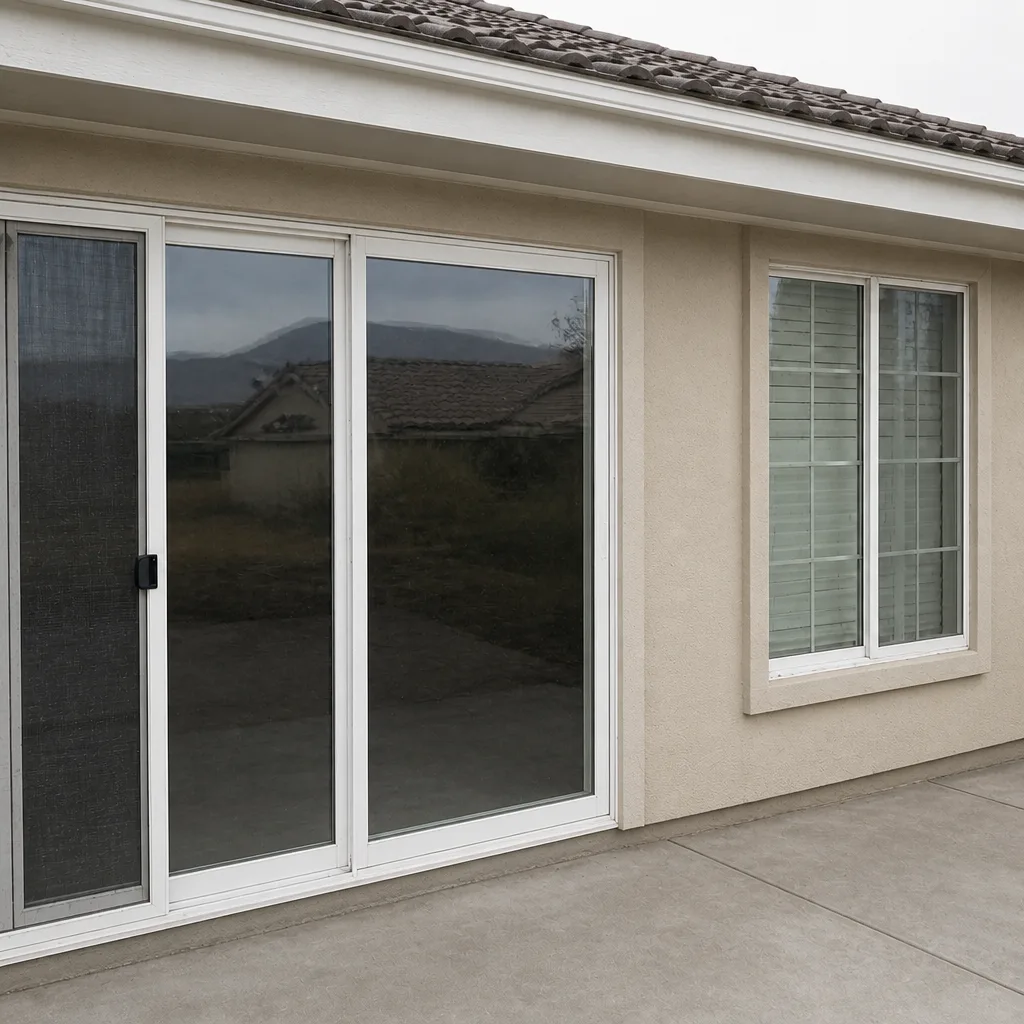
See the difference
 Before
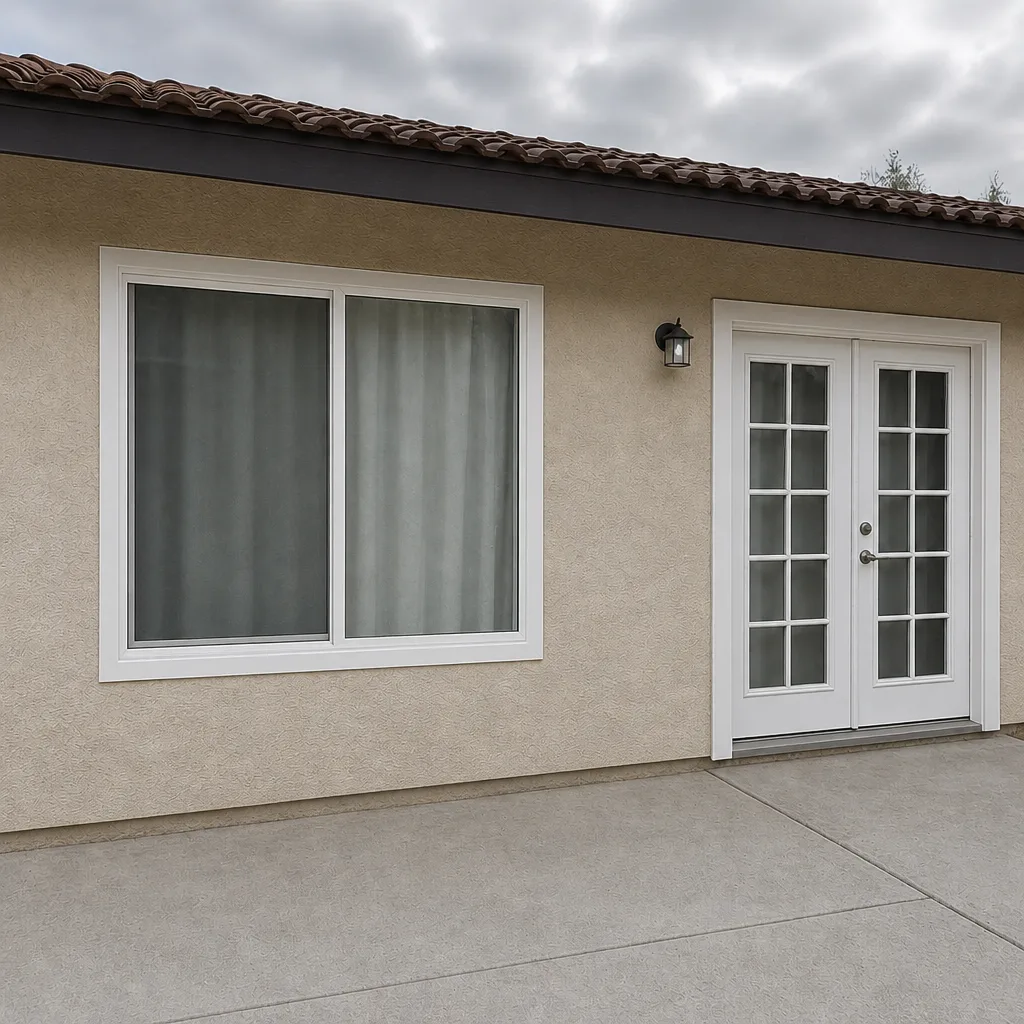 After
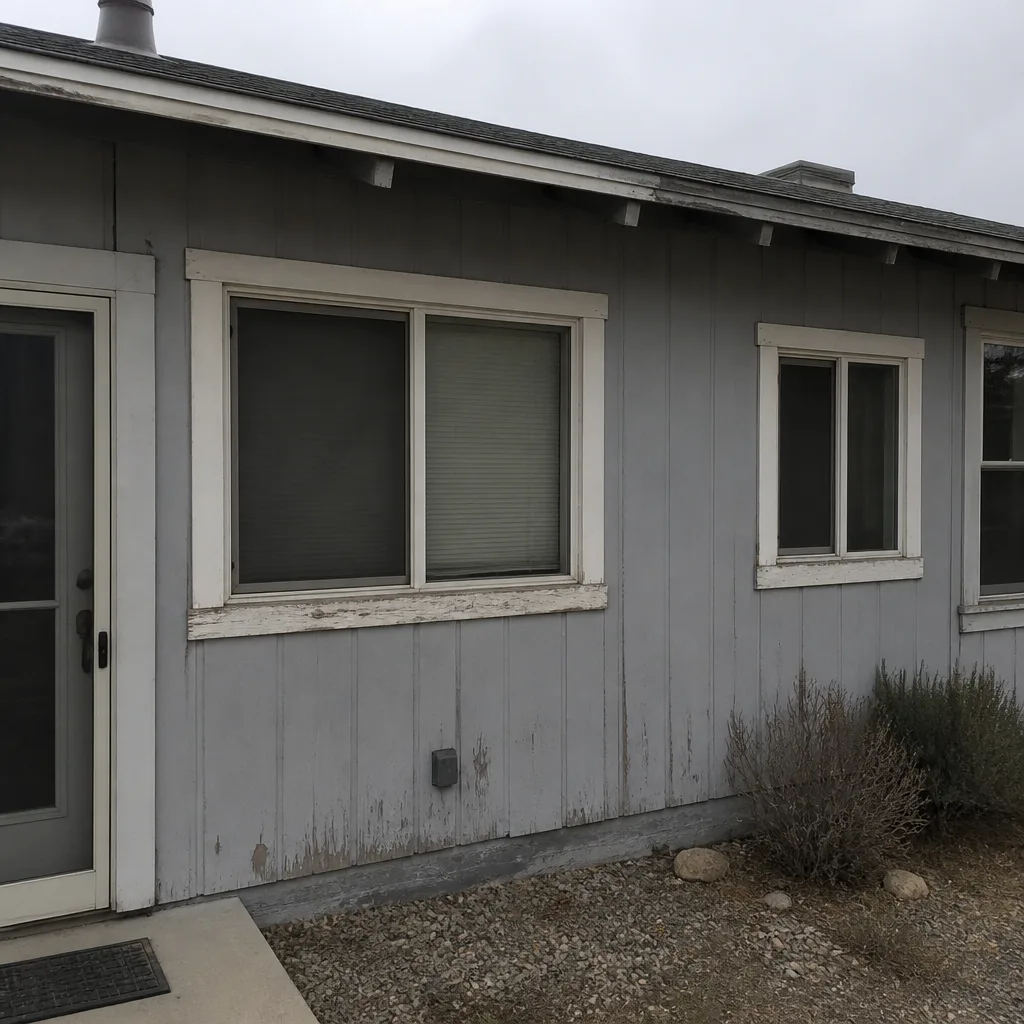 Before
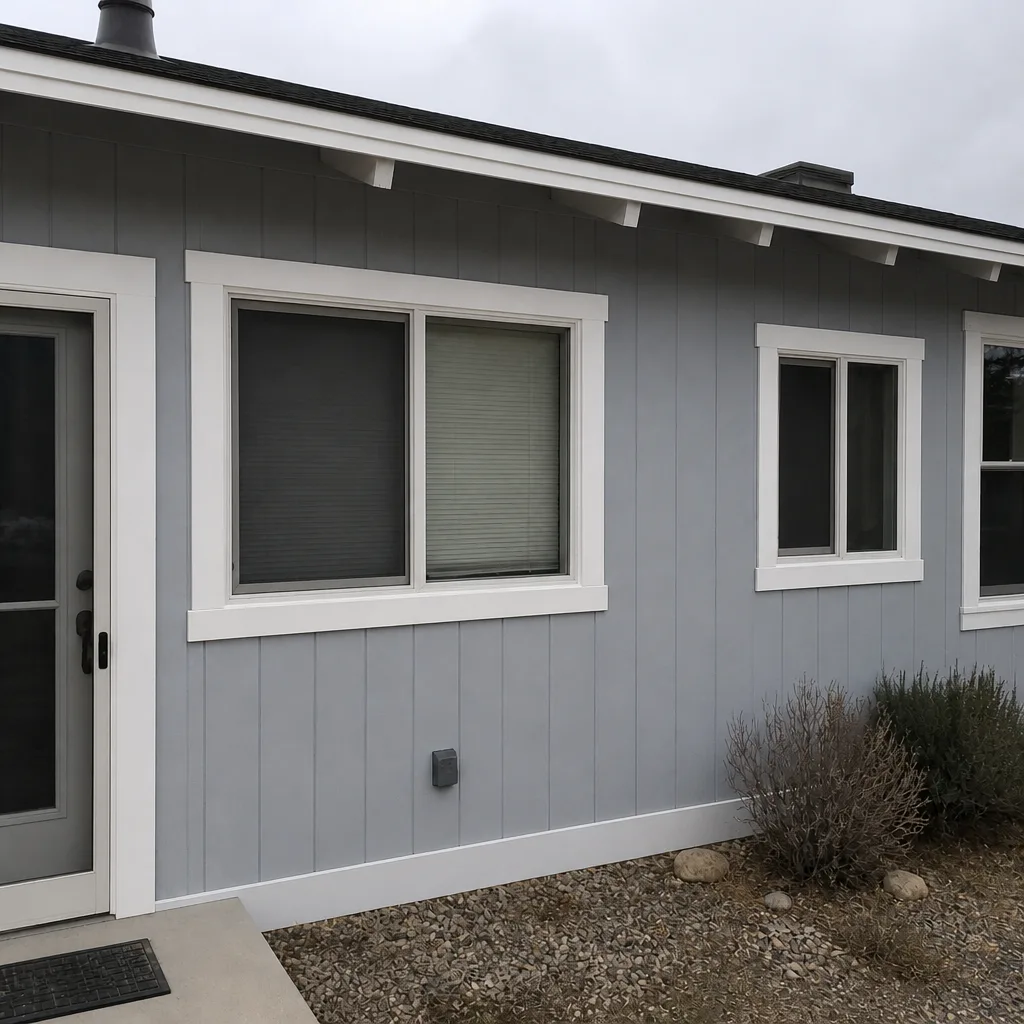 After
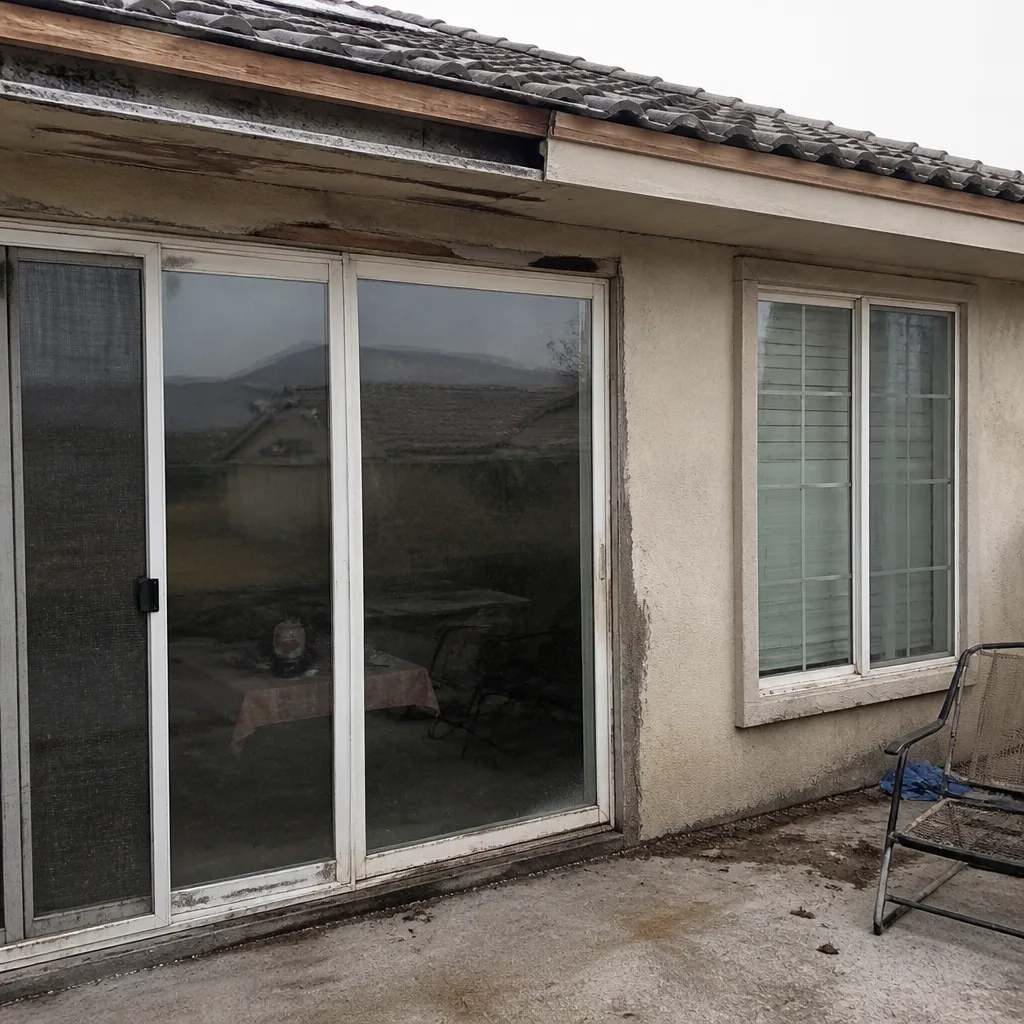 Before
 After
When to Call a Professional
Some window and door problems need a trained glazier, not a repair kit. Call a professional if you see daylight or feel a draft at a frame, if a seal has clouded between panes (a sign of a failed unit or a bad install), if a door binds or drags in summer heat, if you have water staining on the interior sill, or if a storm has cracked or displaced glass. Impact-rated windows and sliding patio doors especially need professional installation – the frame and anchoring system is what carries the wind load, and a homeowner-installed unit isn’t rated. TruePane Windows & Doors Mesquite offers free estimates in Mesquite – call (833) 620-7092 to schedule one. Our technicians have up to 18 years of experience, and every job is covered by our 90-Day Done Right Promise.
Frequently Asked Questions
Search the Nevada State Contractors Board database by license number (not company name), confirm the license is active, confirm the classification covers residential glazing or finish carpentry, check the disciplinary history, and make sure the expiration date is after your installation date. If the contractor can’t or won’t give you their license number, walk away. Call (833) 620-7092 to schedule a free estimate with a licensed team.
Yes, and it’s the single most overlooked question to ask. A contractor who files warranty registrations can produce the last three on request, with dates and product models. A contractor who can’t produce them usually isn’t filing them, which means the manufacturer may have no record of your installation and could decline a claim. Call (833) 620-7092 for a free estimate, and we’ll show you the registration process before you sign.
Cost depends on unit type, size, material, and impact rating. A standard replacement vinyl unit in Mesquite typically runs several hundred dollars per opening installed; impact-rated and energy-efficient lines in PGT, CGI, or CWS families run higher. The only number that matters is the line-item quote for your specific openings. Call (833) 620-7092 for a free estimate with manufacturer lines quoted side by side on paper.
It shouldn’t, and any contractor who won’t commit to a fixed price in writing is telling you something. A proper line-item quote includes materials, installation labor, flashing and sill pan prep, haul-away, and permit fees where applicable. If a contractor can’t put all of that on paper before you sign, the “surprise” on the final bill is already priced in. Call (833) 620-7092 for a fixed written quote.
Permit requirements for window and door replacement in Mesquite depend on scope and the specific property; like-for-like replacements sometimes don’t require a permit while structural changes do. Ask any contractor whether they will pull the permit and complete the inspection if required, and get it in writing. A contractor who won’t handle permits is one who’ll leave you to deal with a problem later. Call (833) 620-7092 and we’ll tell you what your specific project needs.
Most standard window and door replacements are completed in a single visit for a typical number of openings. Larger projects, custom units, or impact-rated lines that need to be ordered can take longer between order and install. We tell you the schedule before you sign, and we show up when we say. Call (833) 620-7092 for a free estimate and a realistic timeline.
The Bottom Line
Hiring a windows and doors contractor in Mesquite is a vetting process, not a price comparison. Check the Nevada license (three minutes), confirm manufacturer-certified installer status, ask to see the last three warranty registrations, read the contract for method-specific installation language, and hold final payment until a daylight walk-through. Four specific questions, one written contract, and one payment clause. A contractor who does the invisible work will answer all of them without flinching, and a contractor who doesn’t will show you who they are before the first dollar changes hands. We’re proud to be a licensed and insured Mesquite company backed by TruePane Windows & Doors Mesquite home and our door installation in Mesquite team.
Call (833) 620-7092 to schedule a free estimate with TruePane Windows & Doors Mesquite. We’ll bring manufacturer lines quoted side by side, explain exactly what the installation method will be at your specific openings, and register both warranty layers in writing before the crew leaves. A live person answers every call. Done right, the first time.
Written by the team at TruePane Windows & Doors Mesquite.